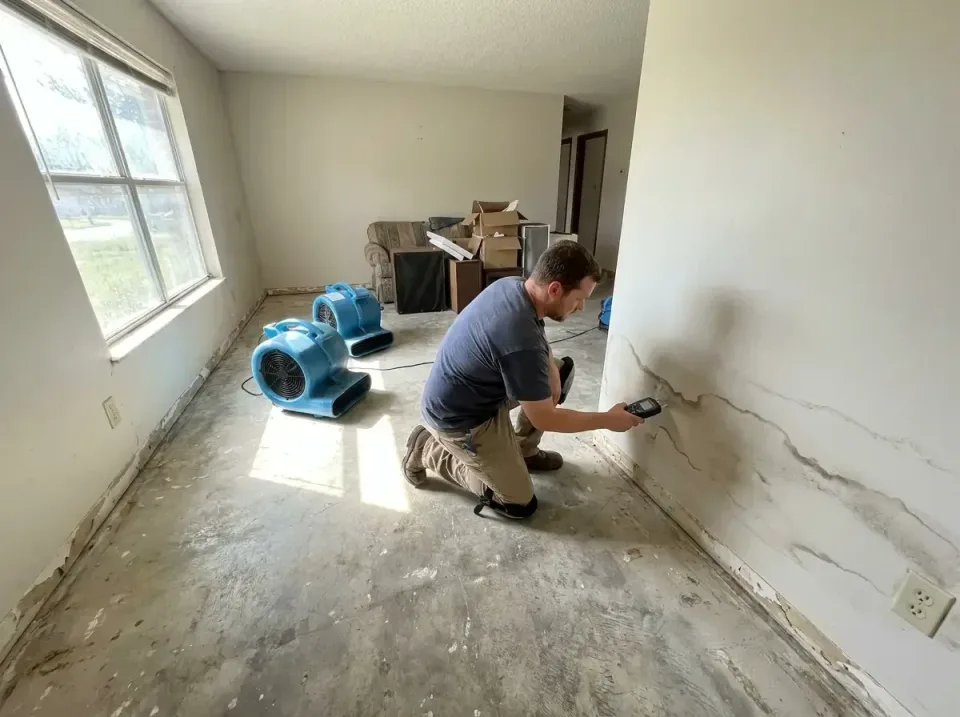
Basement Water Extraction & Crawl Space Drying
Homeowners and property managers book Long Beach basement extraction and crawl space drying after leaks, flooding, or storm water intrusion.
Wet carpet padding is usually not worth saving when it stays saturated, smells musty, or absorbed contaminated water. Padding beneath furniture can hold moisture after the carpet surface feels dry.
In Long Beach, California, technicians use moisture mapping to document wet-area boundaries rather than guessing from visible discoloration. That record shows whether water spread beneath walls, furniture, or adjoining flooring.
A musty odor after basement flooding often signals trapped moisture, especially where airflow was blocked. Extraction should begin promptly because hidden saturation can damage tack strips and subfloor materials.
Water Damage Pros provides emergency water extraction throughout Long Beach and all service areas when soaked padding needs a measured salvage decision. Photograph the room before moving furniture, then keep people away from standing water.
Odor: A musty basement smell can indicate padding remains wet below the carpet face.
Contamination: A water category identifies contamination level, so black-water exposure generally requires removal rather than cleaning.
Material volume: A drying class describes affected material and volume, helping determine whether padding can dry in place.
Humidity: A hygrometer measures relative humidity; technicians use that reading to judge whether drying conditions are improving.
Equipment: An LGR dehumidifier removes moisture from air, while containment creates an isolated work area during contaminated removal.
Water Damage Pros documents conditions before disposal, including furniture contact, odor, visible staining, and the padding’s saturation point. That approach helps Long Beach residents avoid discarding salvageable carpet or keeping material that will keep smelling.
For homes with returning mold spots, antimicrobial treatment provides microbial-growth control after extraction. A restoration process overview can help explain why removal decisions should follow documented moisture readings.
Padding exposed to clean water may sometimes be evaluated for drying, but prolonged saturation changes the decision. Black-water backing into a bathroom calls for controlled removal and appropriate handling.
Carpet padding is often removed when it remains saturated after extraction, has a persistent odor, or contacted Category 2 or Category 3 water. The water category describes contamination level, and sewage exposure creates a different risk than a supply-line leak.
Technicians compare the pad with unaffected material using moisture readings and visual inspection. Saturated carpet and pad removal is especially likely when padding has compressed, separated, delaminated, or transferred odor into the carpet backing.
ANSI/IICRC S500: Professional Water Damage Restoration organizes water losses into four water-damage classes. A drying class considers affected material and volume, so a small wet patch may be treated differently from padding spread beneath several rooms.
A household fan moves air but does not measure whether moisture is leaving the pad. Professional drying pairs extraction with psychrometrics, the measurement of air moisture, and equipment selected for the room’s conditions.
A desiccant dehumidifier uses adsorption drying and can help in difficult areas where ordinary dehumidification is less effective. Technicians compare readings against a dry standard rather than stopping when the carpet feels cool or dry.
This matters after brown ceiling stains spread outward or floorboards cup after a pipe leak. Moisture migration can continue below carpet edges, baseboards, and transitions after the visible spill disappears.
A musty odor that returns after cleaning may indicate damp padding, wet tack strips, or moisture beneath the subfloor. ANSI/IICRC S520: Mold Remediation Standard supports controlled work practices when visible growth or contaminated materials require removal.
Containment limits dust and spore spread during demolition. Guidance on water-damage restoration practices can provide useful context for separating extraction, drying, and removal tasks rather than treating odor alone.
HEPA containment with negative-air control helps keep airborne particles from moving into occupied rooms. Where padding is removed, technicians should also inspect adjoining gypsum board, baseboards, and flooring for related moisture.
Standing water near electrical outlets changes the order of work. NFPA 70 National Electrical Code principles require wet electrical systems to be evaluated before powered extraction equipment or air movers are placed.
Black-water sewage cleanup also requires more than carpet cleaning because contaminated materials may need controlled removal and disposal. The United States Environmental Protection Agency and state solid-waste rules can affect how contaminated debris is handled.
A professional assessment is warranted when water came from a toilet, drain backup, flood, or unknown source. Water Damage Pros can coordinate emergency water extraction, structural drying, and saturated material removal while documenting the affected areas for insurance claim documentation.
The best option depends on contamination, pad depth, access, and whether moisture reached the subfloor. Equipment capacity matters more than simply placing several fans in the room.
| Option | Best for | Key detail |
|---|---|---|
| Emergency water extraction | Fresh clean-water loss | Extraction hoses commonly measure 1.5–2 inches for high-volume recovery. |
| Structural drying and dehumidification | Wet pad and subfloor | LGR dehumidifiers remove roughly 80–150 pints daily, conditions permitting. |
| Air-mover drying | Circulating air across exposed materials | Air movers may provide 1,000–3,000 CFM, depending on model. |
| Mold-controlled removal | Odor, growth, or contaminated padding | HEPA scrubbers commonly operate at 500–2,000 CFM during controlled work. |
A water restoration service overview can help homeowners distinguish extraction from structural drying. Dump trailers holding 10–20 cubic yards may be used when widespread saturated materials require removal.
Inspect: Begin with same-day emergency dispatch when padding is soaked, odor is present, or water remains beneath furniture.
Secure power: Verify electrical safety, check dedicated circuits, and use GFCI protection before deploying equipment.
Extract: Remove standing water first, then position an air mover, a high-velocity drying fan, only where it will not block exits.
Place equipment: Keep machines in low-traffic, ventilated areas and route hoses securely across walkways.
Measure: Record daily moisture and humidity documentation, including readings from the pad, carpet backing, and nearby subfloor.
Clear: Stage salvageable contents in a dry climate-controlled area, then remove equipment after target dryness is verified.
Negative air provides controlled exhaust airflow when removal could spread dust. A flood-response process example shows why measured drying is different from leaving fans unattended.
A basement extraction commonly ranges from $1,000–$4,000, with volume, water depth, and drying duration affecting the scope. Regional labor, access, and disposal requirements can shift the estimate in Long Beach.
Crawl-space drying may range from $1,500–$5,000 because insulation, access, and moisture levels change the labor involved. Sewage cleanup commonly ranges from $2,000–$8,000 when contamination, demolition, and disposal are included.
Whole-home water damage may range from $3,000–$10,000 based on affected materials and equipment days. Light-commercial extraction may range from $5,000–$20,000, depending on square footage and occupancy constraints.
The first 24 hours are the priority extraction window, while indoor humidity is commonly managed toward 30–50%. HEPA filtration captures 99.97% of particles at 0.3 microns when properly rated equipment is used.
Final quotes vary by scope, materials, access, and drying conditions.
“Do not judge padding by the carpet’s surface. Check the underside, seams, tack-strip edge, and subfloor before deciding that drying is complete.”
A carpet can feel dry while its pad remains above the material’s saturation point. Psychrometric readings and moisture mapping show whether air conditions support continued drying.
GPP, or grains per pound, helps describe how much moisture air carries. A psychrometric chart then helps technicians compare temperature, humidity, and drying potential instead of relying on touch.
The IICRC S500 framework recognizes four water-damage classes, while water categories identify Category 1, 2, or 3 contamination. Those classifications can change the recommendation from drying to removal.
Common mistake: Replacing carpet while leaving damp padding underneath, which can preserve odor and damage the subfloor.
Water Damage Pros can inspect the pad, record readings, and explain the least disruptive next step. A local water-damage resource can also illustrate why drying decisions depend on material condition and air measurements.
Wet carpet padding is more likely to require replacement after sewage exposure, prolonged saturation, persistent odor, or visible breakdown. Clean-water padding may be evaluated, but only readings and material condition can support a safe decision.
In Long Beach, Water Damage Pros can perform moisture mapping and infrared thermography before recommending saturated material removal. If mold concerns remain, antimicrobial treatment and HEPA vacuuming may follow controlled cleaning and drying.
Class 4 losses involving deep saturation in hardwood, plaster, or concrete need a broader inspection than carpet work alone. Insurance claim documentation can preserve moisture readings, equipment records, and removal photographs.
Start by keeping people away from standing water and avoiding powered equipment near wet outlets. Then call Water Damage Pros at (833) 710-2743 for emergency water extraction and a documented assessment.
Browse all nationwide service options and choose the right fit for your project.
Homeowners and property managers book Long Beach basement extraction and crawl space drying after leaks, flooding, or storm water intrusion.
Homeowners, contractors, and property managers book Long Beach structural drying for wet materials, humidity control, and dehumidification.
Homeowners and property managers book Long Beach mold remediation for contained spore removal, HEPA cleaning, and moisture control.
Homeowners and property managers book Long Beach sewage cleanup for contaminated water, debris, odors, and saturated materials.
Homeowners, property managers, and contractors book Long Beach carpet extraction for wet padding, water recovery, and controlled drying.
Homeowners and property managers book Long Beach gray water extraction for contaminated water, wet carpet, and moisture-damaged materials.
Homeowners and property managers book Long Beach ceiling drying for stains, leaks, and saturated gypsum board.
Homeowners and property managers book Long Beach air testing and HEPA scrubbing after flooding, odors, or suspected mold.
Homeowners, contractors, and property managers book Long Beach moisture mapping to locate hidden water and document drying needs.
Homeowners and property managers book Long Beach hardwood floor extraction and drying after leaks, floods, or saturated carpet.
Homeowners and property managers book Long Beach HEPA vacuuming and antimicrobial treatment after water damage or mold cleanup.
Homeowners and property managers book Long Beach odor removal, ozone treatment, and air cleaning after water damage.
Homeowners, contractors, and property managers book Long Beach wet vacuum extraction with air movers for saturated floors and contents.
Homeowners, contractors, and property managers book Long Beach contents drying and saturated material removal after water damage.
Storm damage water extraction for Long Beach homeowners, property managers, and contractors facing rain intrusion or floodwater.
Homeowners, property managers, and contractors receive organized claim records for water damage in Long Beach.
Homeowners, contractors, and property managers book Long Beach mold testing, air sampling, and controlled spore removal.
Homeowners, contractors, and property managers book Long Beach humidity monitoring and ventilation for damp, musty spaces.
Homeowners, contractors, and property managers book Long Beach drywall extraction to remove trapped moisture and dry wall cavities.
Homeowners and property managers book Long Beach crawl-space moisture control for damp ducts, odors, insulation, and hidden water damage.
Homeowners and property managers book Long Beach clean-water extraction for wet carpet, floors, drywall, and salvageable contents.
Commercial extraction and drying helps Long Beach property managers protect offices, retail spaces, and multifamily buildings after water damage.
Homeowners book Long Beach flood cleanup for water extraction, saturated material removal, and documented structural drying.
Homeowners, property managers, and contractors book Long Beach mold inspections and air testing after flooding or hidden moisture.
Select your region to see local emergency water extraction & 24/7 flood response providers and cities we cover.
We connect you with trusted local providers in your state or city. Call or email us today.