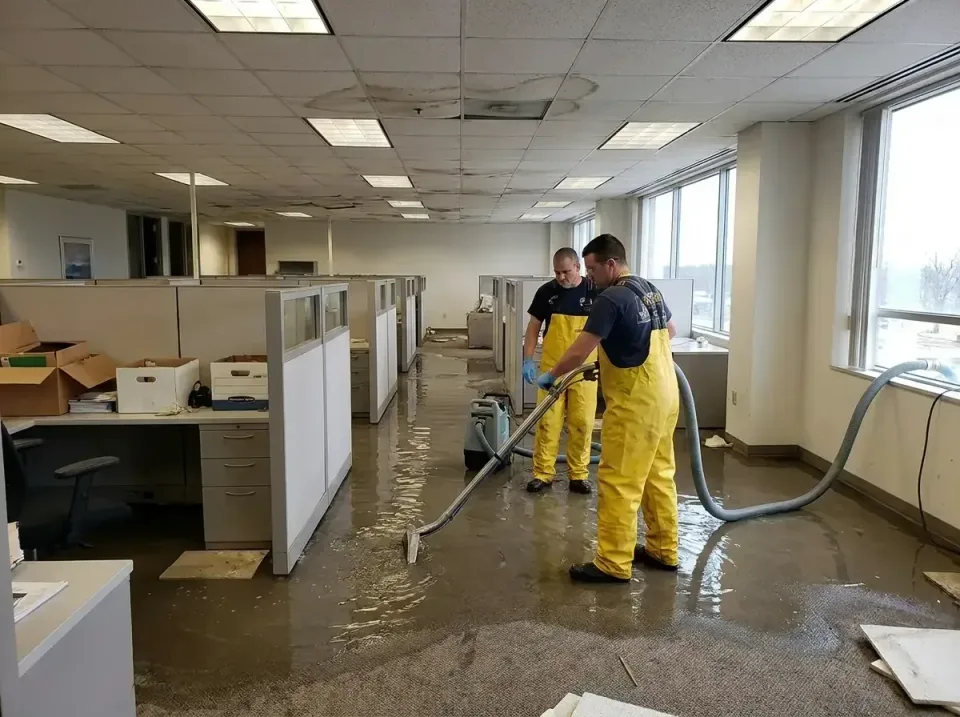
Basement Water Extraction & Crawl Space Drying
Homeowners and property managers book Long Beach basement extraction and crawl space drying after leaks, flooding, or storm water intrusion.
Black water backing into a bathroom usually costs more than clean-water extraction because its contamination level requires controlled handling. Across the United States, emergency extraction commonly ranges from $1,000 to $20,000, depending on the affected area.
In Long Beach, a basement or crawl-space incident may involve hidden moisture behind walls, beneath flooring, or around utilities. Source removal starts by stopping the active leak before equipment is placed.
A Category 3 water category can require saturated material removal, protective controls, and additional documentation. Water Damage Pros can coordinate emergency water extraction throughout Long Beach and across all service areas.
If sewage enters a bathroom, avoid contact and keep people away from the affected room. A technician must evaluate electrical hazards before extraction begins.
Musty odor: Basement odors often point to trapped moisture, so moisture mapping should document wet-area boundaries before drying begins.
Ceiling stains: Brown ceiling stains spreading outward can indicate moisture migration beyond the visible mark, increasing the affected drying class.
Carpet padding: Wet carpet padding beneath furniture may reach its saturation point quickly, making removal more practical than repeated surface drying.
Cupped boards: Floorboards cupping after a pipe leak may need controlled drying rather than high heat, because uneven vapor pressure can worsen distortion.
Electrical outlets: Standing water near electrical outlets requires a safety check before an air mover or extractor operates. Restoration safety practices help crews separate electrical evaluation from equipment placement.
A hygrometer measures relative humidity, while psychrometrics tracks air-moisture conditions during drying. ANSI/IICRC S500 recognizes four water-damage classes, helping technicians relate material type and water volume to labor.
Emergency water extraction costs reflect water volume, contamination, access, affected materials, and equipment days. Basement extraction often falls between $1,000 and $4,000, while whole-home damage may reach $3,000 to $10,000.
A water category describes contamination level. Category 1 clean water is generally less complex than Category 2 gray-water extraction or Category 3 black-water cleanup. Black water may require controlled demolition, disposal, and containment rather than simple pumping.
The drying class describes affected material and volume. Wet carpet and pad may dry differently from gypsum board, hardwood, plaster, or oriented strand board. Class 4 conditions involve deep saturation in hardwood, plaster, or concrete and can require specialized structural drying.
The first 24 hours are a priority extraction window because standing water can move into porous materials. Brown ceiling stains spreading outward, floorboards cupping, or condensation coating crawl-space ducts may show that moisture migration is continuing.
Technicians use moisture mapping to record wet-area boundaries, then compare readings against unaffected materials. A pin meter measures material moisture, while a thermal imaging camera shows surface temperature patterns that may reveal concealed dampness.
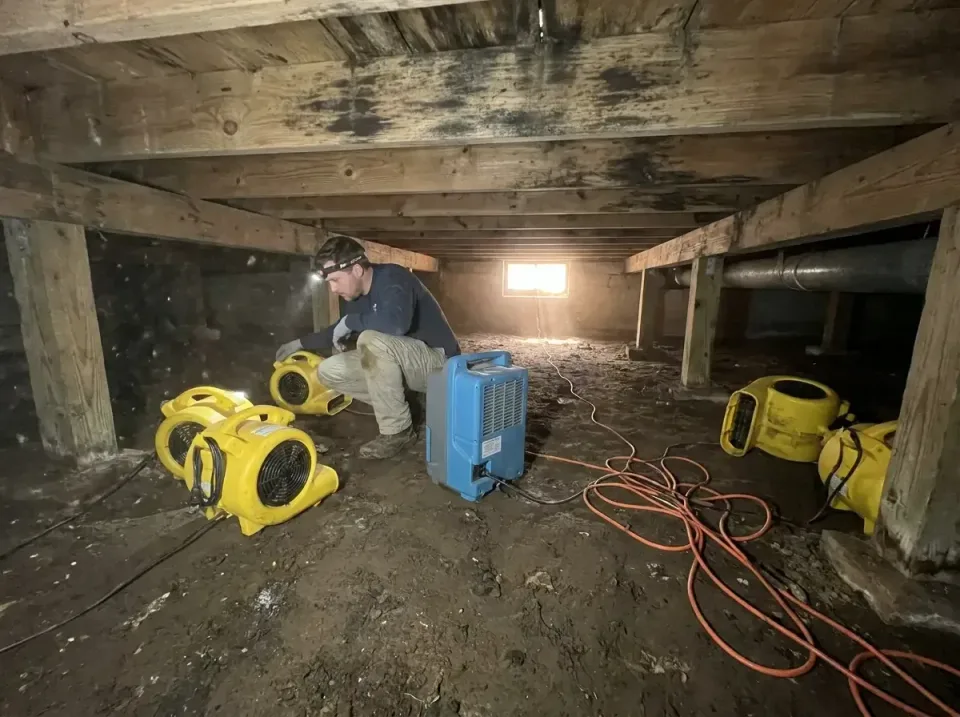
Drying commonly takes 3–5 days, but conditions determine the actual duration. Air movers circulate air, while dehumidifiers remove moisture; using fans without humidity control can leave moisture trapped inside walls or flooring.
An LGR dehumidifier may remove 80–150 pints daily, while air movers provide directed circulation. The equipment count depends on room size, material absorption, access, and the psychrometric readings collected each day.
Truck-mounted extraction handles high water volume, but portable equipment may suit stairs, tight rooms, or multifamily apartments. A light-commercial extraction project can cost $5,000–$20,000 when square footage and occupancy constraints increase labor.
Professional drying also includes daily readings, equipment logs, photo records, and a dry standard based on unaffected materials. These records support insurance claim documentation and help prevent premature equipment removal.
Clean water and black water are handled differently because black water presents greater contamination and disposal concerns. The EPA Clean Water Act may apply when contaminated water enters a discharge system, while state solid-waste rules can govern sewage debris.
Mold spots returning after cleanup may indicate incomplete drying rather than a simple cleaning failure. Antimicrobial treatment can support microbial-growth control, but it does not replace source removal or structural drying.
For demolition, local building permits may apply, and NFPA 70 requires evaluation of wet electrical systems. Water Damage Pros can assess the affected materials, explain the estimate, and identify when structural drying, saturated material removal, or mold inspection should follow extraction.
The right service depends on contamination, access, and how deeply materials absorbed water. A water damage restoration equipment guide can help explain why equipment capacities affect labor.
| Option | Best for | Key detail |
|---|---|---|
| Emergency water extraction | Burst pipes and storm damage | 24/7 dispatch; extraction hoses measure 1.5–2 inches |
| Structural drying and dehumidification | Walls, floors, and ceilings | LGR dehumidifiers remove 80–150 pints daily |
| Basement and crawl-space drying | Below-grade moisture | Access, insulation, and hidden moisture affect scope |
| Sewage and black-water cleanup | Contaminated bathroom or floodwater | Requires controlled handling and disposal planning |
| Commercial water extraction | Offices and occupied buildings | Equipment staging must account for occupancy limits |
Storm damage extraction may need larger recovery capacity, while portable units suit restricted access. Dump trailers used for debris can hold 10–20 cubic yards, depending on the project.
Dispatch: Water Damage Pros records the loss details and works toward a same-day emergency dispatch for clean-water extraction.
Safety check: Technicians verify electrical safety, identify wet outlets, and use GFCI protection around extraction equipment.
Inspection: The crew measures affected rooms, identifies the water category, and documents moisture migration.
Placement: Equipment stays in low-traffic, ventilated areas, with air movers kept clear of exits.
Routing: Hoses are secured across walkways, reducing trip hazards while water moves through the recovery system.
Monitoring: Daily moisture and humidity readings show whether materials are approaching the dry standard. Water restoration planning resources can clarify why documentation affects the work sequence.
Clearance: Equipment is removed after target dryness, while salvageable contents remain in a dry, climate-controlled area.
Basement extraction: $1,000–$4,000. Volume, water depth, and drying duration influence the final scope. Air movers may deliver 1,000–3,000 CFM, depending on the model.
Crawl-space drying: $1,500–$5,000. Limited access, insulation, and moisture levels can increase labor and equipment time.
Sewage cleanup: $2,000–$8,000. Contamination, demolition, protective controls, and disposal add work beyond pumping.
Whole-home water damage: $3,000–$10,000. Affected materials and equipment days are major cost drivers. HEPA scrubbers may provide 500–2,000 CFM during controlled cleanup.
Light-commercial extraction: $5,000–$20,000. Square footage and occupancy constraints often require phased work.
Regional labor, disposal requirements, access, and drying conditions can shift these ranges. Final quotes vary by scope, materials, access, and drying conditions.
A drying class reflects affected material and volume, not simply the amount of visible water. Moisture can migrate behind trim or beneath flooring even after the surface looks dry.
A hygrometer measures relative humidity, while psychrometrics compares air temperature and moisture to guide equipment changes. If materials remain near their saturation point, a desiccant dehumidifier may suit conditions better than basic circulation.
An air mover is a high-velocity drying fan, but it cannot remove moisture by itself. Water Damage Pros uses readings to decide placement, airflow, and when equipment can safely leave.
“Drying should be measured against an unaffected area, not judged by touch alone. That comparison helps prevent a musty odor from returning after the room appears finished.”
Common mistake: Running household fans without checking humidity can spread moisture into adjoining rooms. Professional drying documentation shows why readings matter more than airflow alone.
Emergency extraction pricing usually follows the water category, drying class, affected materials, access, and equipment days. ANSI/IICRC S500 provides four water-damage classes that help organize the inspection.
A musty odor after basement flooding, brown ceiling stains spreading outward, or condensation coating crawl-space ducts can signal moisture beyond the original area. Indoor air-quality testing may help after drying when odors or respiratory concerns remain.
In Long Beach, CA, start by stopping the source and avoiding wet electrical areas. Water Damage Pros can review the damage, explain the cost range, and identify whether drying, material removal, or follow-up testing fits the situation.
For a practical next step, document the affected rooms and request an assessment from Water Damage Pros at (833) 710-2743.
Browse all nationwide service options and choose the right fit for your project.
Homeowners and property managers book Long Beach basement extraction and crawl space drying after leaks, flooding, or storm water intrusion.
Homeowners, contractors, and property managers book Long Beach structural drying for wet materials, humidity control, and dehumidification.
Homeowners and property managers book Long Beach mold remediation for contained spore removal, HEPA cleaning, and moisture control.
Homeowners and property managers book Long Beach sewage cleanup for contaminated water, debris, odors, and saturated materials.
Homeowners, property managers, and contractors book Long Beach carpet extraction for wet padding, water recovery, and controlled drying.
Homeowners and property managers book Long Beach gray water extraction for contaminated water, wet carpet, and moisture-damaged materials.
Homeowners and property managers book Long Beach ceiling drying for stains, leaks, and saturated gypsum board.
Homeowners and property managers book Long Beach air testing and HEPA scrubbing after flooding, odors, or suspected mold.
Homeowners, contractors, and property managers book Long Beach moisture mapping to locate hidden water and document drying needs.
Homeowners and property managers book Long Beach hardwood floor extraction and drying after leaks, floods, or saturated carpet.
Homeowners and property managers book Long Beach HEPA vacuuming and antimicrobial treatment after water damage or mold cleanup.
Homeowners and property managers book Long Beach odor removal, ozone treatment, and air cleaning after water damage.
Homeowners, contractors, and property managers book Long Beach wet vacuum extraction with air movers for saturated floors and contents.
Homeowners, contractors, and property managers book Long Beach contents drying and saturated material removal after water damage.
Storm damage water extraction for Long Beach homeowners, property managers, and contractors facing rain intrusion or floodwater.
Homeowners, property managers, and contractors receive organized claim records for water damage in Long Beach.
Homeowners, contractors, and property managers book Long Beach mold testing, air sampling, and controlled spore removal.
Homeowners, contractors, and property managers book Long Beach humidity monitoring and ventilation for damp, musty spaces.
Homeowners, contractors, and property managers book Long Beach drywall extraction to remove trapped moisture and dry wall cavities.
Homeowners and property managers book Long Beach crawl-space moisture control for damp ducts, odors, insulation, and hidden water damage.
Homeowners and property managers book Long Beach clean-water extraction for wet carpet, floors, drywall, and salvageable contents.
Commercial extraction and drying helps Long Beach property managers protect offices, retail spaces, and multifamily buildings after water damage.
Homeowners book Long Beach flood cleanup for water extraction, saturated material removal, and documented structural drying.
Homeowners, property managers, and contractors book Long Beach mold inspections and air testing after flooding or hidden moisture.
Select your region to see local emergency water extraction & 24/7 flood response providers and cities we cover.
We connect you with trusted local providers in your state or city. Call or email us today.