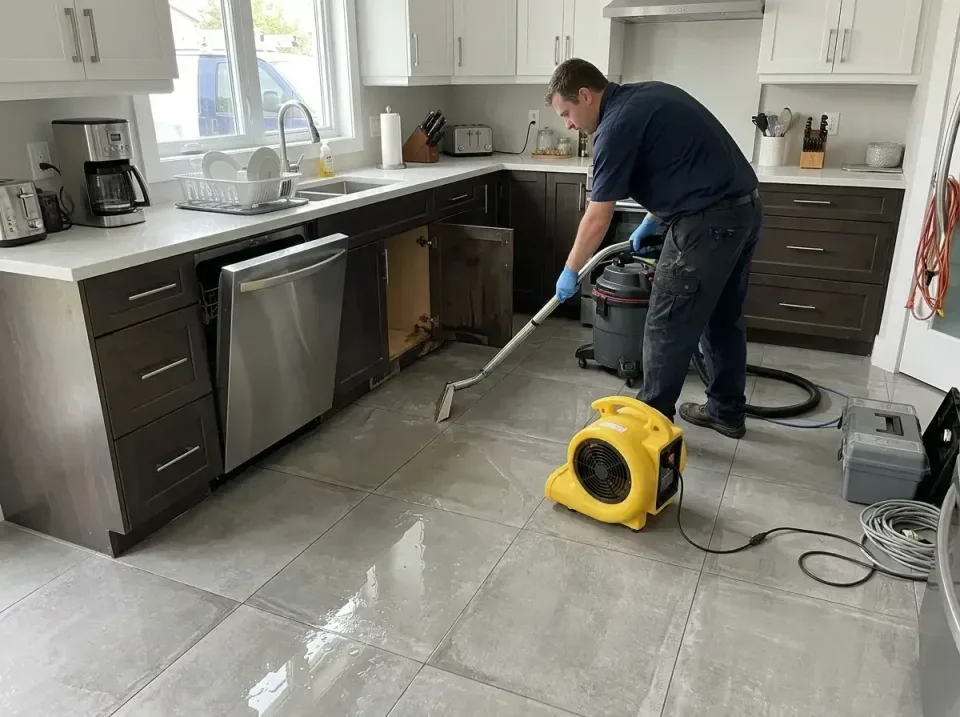
Basement Water Extraction & Crawl Space Drying
Homeowners and property managers book Long Beach basement extraction and crawl space drying after leaks, flooding, or storm water intrusion.
Floorboards cup because their lower surfaces absorb water and expand more than their finished tops. This moisture imbalance can worsen during the first 24 hours after a pipe leak.
In Long Beach, California, hidden moisture may remain beneath furniture, carpet, or trim after visible water disappears. A musty odor or returning mold spots suggests drying stopped too soon.
Water Damage Pros checks the leak source, flooring, subfloor, and nearby walls before placing equipment. Their water damage service areas show how similar extraction work is handled across different properties.
Do not sand raised boards immediately. Hardwood floor drying must first reduce moisture, document affected boundaries, and compare readings against unaffected materials.
If water reached outlets, avoid the room until electrical systems receive professional evaluation. Early emergency water extraction can limit replacement work and protect salvageable flooring.
Musty odor: Basement odors can indicate trapped moisture, so psychrometrics measures air moisture before drying equipment is sized.
Brown stains: Spreading ceiling stains can signal moisture migration, making moisture mapping useful for documenting wet-area boundaries.
Wet padding: Carpet padding beneath furniture may hold water after surface carpet feels dry; a hygrometer tracks surrounding relative humidity.
Cupped boards: Floorboards may remain distorted after drying, so a dry standard compares readings with nearby unaffected flooring.
Electrical risk: Standing water near outlets requires source isolation before extraction; ANSI/IICRC S500 separates work by four water-damage classes.
Cupping starts when the underside of a wood plank gains moisture faster than the finished face. The board expands across its width, while the drier top pulls the edges upward. A small leak can create a larger problem if water travels beneath several rows through moisture migration.
The first inspection should identify the water category, meaning contamination level, and the drying class, meaning affected material and volume. Clean water from a supply line may support salvage, but gray or black water changes handling, demolition, and disposal requirements. A pin meter reads material moisture, while infrared imaging shows temperature patterns that can reveal hidden wet zones.
The ANSI/IICRC S500 framework recognizes four water-damage classes. Class 4 involves deep saturation in hardwood, plaster, or concrete, so surface fans alone may leave moisture below the boards.
Water can pass through seams, baseboards, carpet padding, and underlayment before appearing elsewhere. Wet carpet padding beneath furniture often explains why a room continues smelling musty after the leak is repaired. The subfloor may also remain damp while the flooring surface feels nearly normal.
A drying technician establishes a dry standard using unaffected areas for comparison. Psychrometric monitoring tracks temperature and humidity, while a low-grain-refrigerant dehumidifier removes moisture from the air. Air movers circulate that drier air, but they do not replace extraction or dehumidification.
If gypsum board reached saturation, removal may be needed because the porous material can retain water. Oriented strand board beneath the flooring also requires careful drying because swelling can affect structural connections and flooring alignment.
Minor cupping may improve as moisture levels equalize, but severe crowning, delamination, loose fasteners, or swollen subfloor sections may require replacement. Do not force boards flat, refinish them, or trap them beneath plastic before readings stabilize. Those choices can lock moisture inside and increase repair costs.
During demolition, contaminated demolition debris must be separated from salvageable materials. Workers handling mold or damaged materials may use NIOSH-approved N95 respirators, with procedures guided by the work conditions and OSHA respiratory-protection requirements. Water Damage Pros can coordinate restoration drying and extraction practices when a burst pipe affects flooring, walls, or contents.
A practical drying plan includes extraction, equipment placement, daily readings, and final clearance. Technicians compare flooring, subfloor, trim, and wall readings rather than relying on a single surface measurement. Typical drying may take 3–5 days, but conditions determine the actual schedule.
A commercial extractor removes bulk water, while an LGR dehumidifier controls vapor in the room. Equipment should remain clear of exits, and air movers should not create a safety hazard around walkways. Ozone equipment should never run in occupied spaces because odor treatment does not solve trapped structural moisture.
When readings reach the target dry standard, equipment is removed and documentation is completed. If mold spots return, arrange mold inspection and air testing instead of repeating surface cleaning without locating the moisture source.
The right method depends on water volume, access, contamination, and how deeply the flooring absorbed moisture. A pin meter versus infrared camera comparison helps separate material readings from thermal patterns.
A truck-mounted extractor suits large accessible areas, while portable extraction works better near stairs or tight rooms. Hardwood floor drying also benefits from contents inventory and protective floor coverings.
| Option | Best for | Key detail |
|---|---|---|
| Hardwood floor drying | Cupped planks and wet subfloors | Pin and pinless moisture readings guide decisions |
| Emergency water extraction | Recent supply-line leaks | Truck-mounted units recover high water volume |
| Structural drying and dehumidification | Hidden moisture beneath boards | LGR units remove airborne moisture |
| HEPA containment | Demolition with dust or mold concerns | Six-mil poly can isolate the work area |
A documented drying plan is safer than guessing with household fans. Hardwood water-removal guidance can help explain why equipment choice changes with stair access and flooring depth.
Stop the source: Shut off the failed pipe and keep people away from wet electrical areas.
Inspect safely: Verify electrical conditions before equipment placement and identify the water category.
Extract water: Remove standing water and saturated padding before relying on air movement.
Check power: Use dedicated circuits before deployment, with GFCI protection around extraction equipment.
Route hoses: Secure hoses across walkways and keep a clear 36-inch ADA access route.
Dry contents: Move salvageable items into a dry, climate-controlled staging area.
Document clearance: Record moisture readings daily and remove equipment only after target dryness. EPA mold-remediation guidance also supports controlled work practices when demolition is needed.
Floor repair pricing is shaped by the water volume, drying duration, access, and whether boards or subfloor materials need removal. Regional labor and disposal practices can change the final range.
Basement extraction: $1,000–$4,000, based on volume, depth, and drying duration.
Crawl-space drying: $1,500–$5,000, based on access, insulation, and moisture levels.
Sewage cleanup: $2,000–$8,000, based on contamination, demolition, and disposal.
Whole-home water damage: $3,000–$10,000, based on affected materials and equipment days.
Light-commercial extraction: $5,000–$20,000, based on square footage and occupancy constraints.
Class 4 saturation can involve hardwood and subfloor materials, requiring structural drying and dehumidification. LGR dehumidifiers may remove 80–150 pints daily, while 1.5–2-inch hoses support high-volume extraction. Final quotes vary by scope, materials, access, and drying conditions.
A cupped floor is not ready for sanding because it looks better from above. Use psychrometrics, material readings, and a dry standard before deciding whether boards can remain.
Water category and drying class determine the equipment, containment, and cleaning steps needed.
Psychrometrics measures air-moisture conditions, while moisture readings show how the flooring responds. Antimicrobial treatment may help control microbial growth after extraction, but it cannot replace source removal.
Containment creates an isolated work area when demolition could spread dust or spores. Keep affected materials separated from clean contents, and document readings throughout the job.
Common mistake: Running an air mover without a dehumidifier can circulate moisture and prolong drying, especially in a closed room.
Water Damage Pros can assess the floor, identify the affected drying class, and explain whether drying or replacement is the more sensible path. Their water damage restoration resource also reflects the equipment and documentation commonly used for these projects.
Cupped boards usually point to uneven moisture absorption beneath the finished surface. Fast extraction, moisture mapping and infrared thermography, and controlled drying give the flooring its best chance of recovery.
A musty odor after basement flooding or mold inspection and air testing can reveal moisture that a visual check misses. Air movers may operate at 800–2,400 CFM, while drying commonly takes 3–5 days under changing conditions.
Homeowners in Long Beach, CA can review all service areas when managing properties beyond the immediate neighborhood. Keep furniture off visibly wet flooring and avoid sanding until readings support a dry standard.
For a pipe leak, contact Water Damage Pros at (833) 710-2743 and request an assessment with documented moisture readings before deciding on repairs.
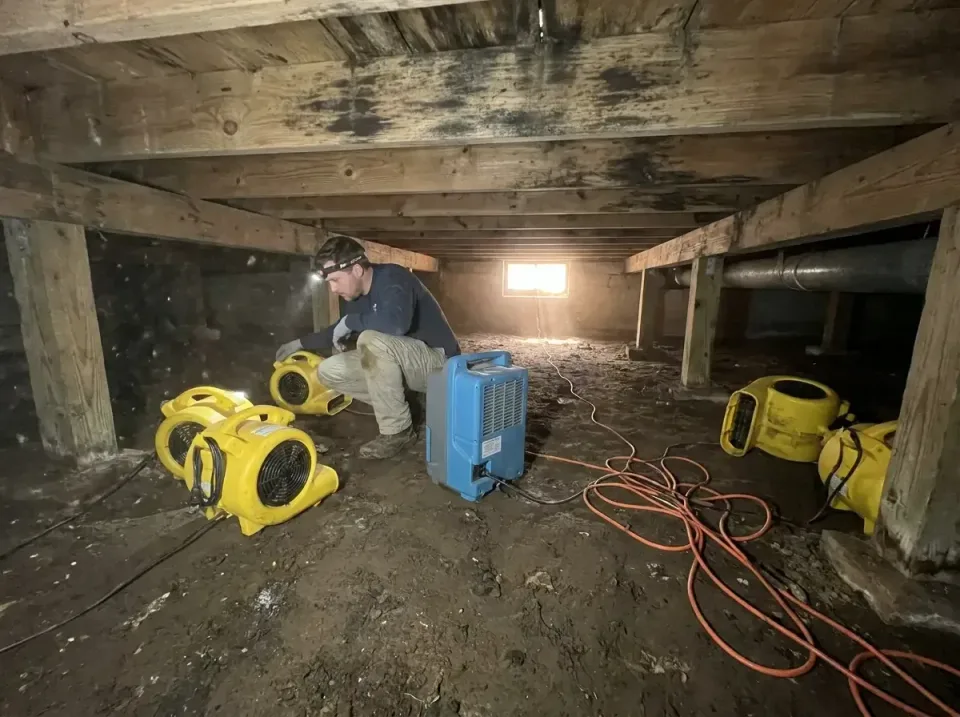
Browse all nationwide service options and choose the right fit for your project.
Homeowners and property managers book Long Beach basement extraction and crawl space drying after leaks, flooding, or storm water intrusion.
Homeowners, contractors, and property managers book Long Beach structural drying for wet materials, humidity control, and dehumidification.
Homeowners and property managers book Long Beach mold remediation for contained spore removal, HEPA cleaning, and moisture control.
Homeowners and property managers book Long Beach sewage cleanup for contaminated water, debris, odors, and saturated materials.
Homeowners, property managers, and contractors book Long Beach carpet extraction for wet padding, water recovery, and controlled drying.
Homeowners and property managers book Long Beach gray water extraction for contaminated water, wet carpet, and moisture-damaged materials.
Homeowners and property managers book Long Beach ceiling drying for stains, leaks, and saturated gypsum board.
Homeowners and property managers book Long Beach air testing and HEPA scrubbing after flooding, odors, or suspected mold.
Homeowners, contractors, and property managers book Long Beach moisture mapping to locate hidden water and document drying needs.
Homeowners and property managers book Long Beach hardwood floor extraction and drying after leaks, floods, or saturated carpet.
Homeowners and property managers book Long Beach HEPA vacuuming and antimicrobial treatment after water damage or mold cleanup.
Homeowners and property managers book Long Beach odor removal, ozone treatment, and air cleaning after water damage.
Homeowners, contractors, and property managers book Long Beach wet vacuum extraction with air movers for saturated floors and contents.
Homeowners, contractors, and property managers book Long Beach contents drying and saturated material removal after water damage.
Storm damage water extraction for Long Beach homeowners, property managers, and contractors facing rain intrusion or floodwater.
Homeowners, property managers, and contractors receive organized claim records for water damage in Long Beach.
Homeowners, contractors, and property managers book Long Beach mold testing, air sampling, and controlled spore removal.
Homeowners, contractors, and property managers book Long Beach humidity monitoring and ventilation for damp, musty spaces.
Homeowners, contractors, and property managers book Long Beach drywall extraction to remove trapped moisture and dry wall cavities.
Homeowners and property managers book Long Beach crawl-space moisture control for damp ducts, odors, insulation, and hidden water damage.
Homeowners and property managers book Long Beach clean-water extraction for wet carpet, floors, drywall, and salvageable contents.
Commercial extraction and drying helps Long Beach property managers protect offices, retail spaces, and multifamily buildings after water damage.
Homeowners book Long Beach flood cleanup for water extraction, saturated material removal, and documented structural drying.
Homeowners, property managers, and contractors book Long Beach mold inspections and air testing after flooding or hidden moisture.
Select your region to see local emergency water extraction & 24/7 flood response providers and cities we cover.
We connect you with trusted local providers in your state or city. Call or email us today.