Basement Water Extraction & Crawl Space Drying
Homeowners and property managers book Long Beach basement extraction and crawl space drying after leaks, flooding, or storm water intrusion.
Why does a musty odor remain after basement flooding? Infrared cameras reveal temperature patterns that often point to concealed moisture behind walls.
The camera does not measure water directly. It shows cooler or warmer surface areas created by evaporation, moisture migration, or insulation changes.
That matters when brown ceiling stains spread outward, carpet padding stays wet beneath furniture, or black water backs into a Long Beach bathroom. A water category describes contamination level, so black-water cleanup requires more than ordinary extraction.
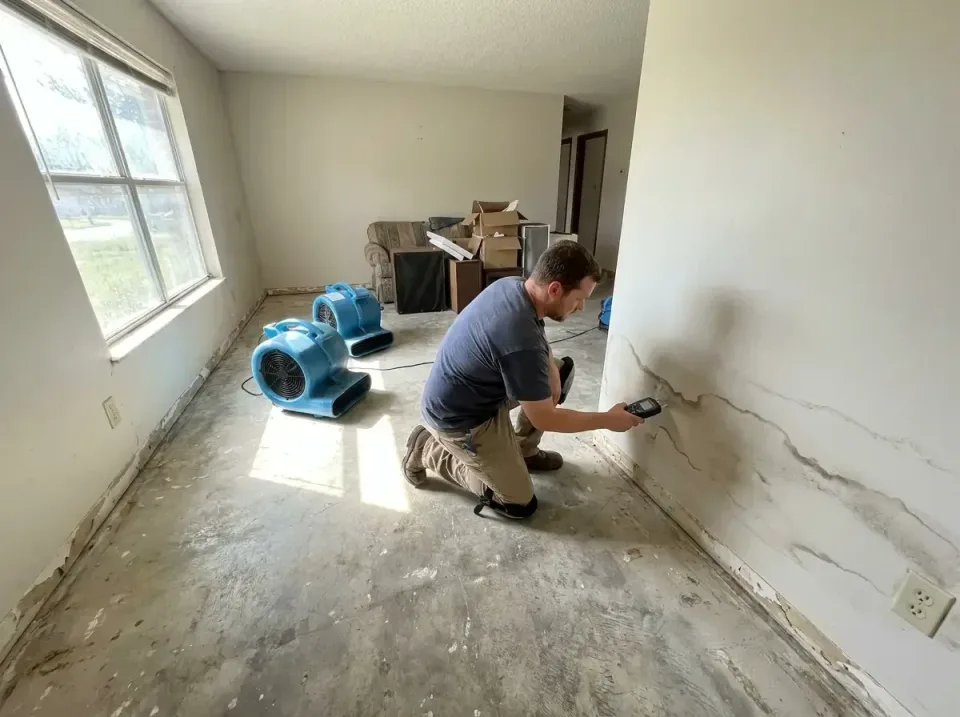
Technicians compare thermal images with a pin or pinless meter, then document affected areas. Water Damage Pros can coordinate emergency extraction and service coverage across all areas when a leak affects several rooms.
Never touch standing water near outlets. Stop the source when safe, avoid energized equipment, and arrange a professional inspection before opening wall cavities.
Lead-in: A thermal imaging camera maps surface temperature patterns, helping locate hidden wet areas without immediate demolition.
Musty odor: Moisture mapping records documented wet-area boundaries, helping separate an old basement odor from an active leak.
Ceiling stains: GPP means grains per pound, a psychrometric measure that helps show how much moisture air can hold.
Wet carpet: Moisture migration moves water through flooring, walls, and insulation, so visible dryness does not prove the padding is dry.
Electrical safety: Standing water near outlets requires source removal first, followed by electrical evaluation before drying equipment enters the room.
A practical inspection combines thermal patterns with moisture readings. Restoration technicians comparing drying methods should document conditions rather than rely on camera colors alone.
A thermal imaging camera detects surface temperature differences, not moisture itself. Evaporation can cool gypsum board, baseboards, or plaster, while insulation gaps can create similar patterns.
The technician scans wall faces, ceilings, floors, and adjacent rooms, then checks suspicious areas with a pin or pinless moisture meter. This pin meter versus infrared camera comparison matters: the camera finds patterns, while the meter helps confirm material readings.
Moisture mapping turns those findings into documented wet-area boundaries. A brown ceiling stain spreading outward may reflect moisture migration from a roof or plumbing line, but the source must be stopped before drying begins.
Wet carpet padding beneath furniture can remain damp after the surface feels dry. Water may move beneath tack strips, into drywall edges, or through oriented strand board, producing odor and floorboard cupping later.
ANSI/IICRC S500 divides water damage into four classes based on affected material and volume. A Class 4 condition can involve deep saturation in hardwood, plaster, or concrete, where surface scanning alone cannot establish a dry standard.
Clean water has lower contamination than black water, but both can damage building materials. Black-water sewage cleanup requires regulated handling, controlled removal, and careful decisions about porous gypsum board.
An air mover circulates air; it does not replace moisture removal. An LGR dehumidifier removes moisture from the air, with units commonly rated at 80–150 pints daily.
Technicians use psychrometrics, the measurement of air moisture, temperature, and related conditions, to choose equipment. A hygrometer tracks relative humidity, while readings help determine whether drying is progressing or moisture is returning.
The first 24 hours are a priority extraction window after a loss. Depending on materials and conditions, structural drying commonly takes 3–5 days, though deep wall cavities can require longer monitoring.
Thermal patterns do not automatically justify demolition. A professional compares the suspected area with unaffected materials, verifies moisture readings, and considers the water category before cutting an inspection opening.
Containment limits dust and spore spread during removal. If mold spots return after cleanup, ANSI/IICRC S520 and the EPA Mold Remediation in Schools and Commercial Buildings provide useful frameworks for controlled remediation and air-quality decisions.
Healthcare facilities, hotels, and hospitality properties often need documented isolation because occupants remain nearby. FEMA may also matter when flood losses involve the National Flood Insurance Program; California water-damage documentation resources can help property managers organize photos and drying records.
Water Damage Pros handles moisture mapping and infrared thermography as part of emergency water extraction and structural drying. The practical goal is not to chase every color change, but to identify the source, confirm wet materials, and remove equipment only after readings match the dry standard.
The right option depends on the water category, material depth, and whether demolition is safe. Moisture mapping provides room-by-room documentation before equipment placement.
| Option | Best for | Key detail |
|---|---|---|
| Thermal imaging camera | Hidden wall patterns | Surface temperature mapping, followed by meter confirmation |
| Air mover | Surface circulation | Common models range from 1,000–3,000 CFM |
| LGR dehumidifier | Structural drying | 80–150 pints daily, depending on conditions |
| HEPA containment | Controlled demolition | Six-mil containment poly with negative-air control |
Psychrometric monitoring tracks humidity and temperature while equipment operates. Drying documentation examples for restoration claims can help explain why readings, equipment records, and images belong together.
A camera can reduce unnecessary openings, but it cannot replace material readings. That distinction prevents false confidence after a pipe leak or ceiling stain.
Arrive safely: Begin with same-day emergency dispatch, then verify electrical safety before entering wet areas.
Stop entry: Complete source removal before scanning, so active water does not distort the findings.
Scan surfaces: Use a thermal imaging camera for surface temperature mapping across walls, ceilings, and nearby floors.
Confirm readings: Compare thermal patterns with pin and pinless meter readings before recommending demolition.
Protect access: Place equipment in low-traffic, ventilated areas and keep air movers clear of exits.
Stage contents: Confirm contents before porous-material disposal, moving salvageable items into a dry climate-controlled area.
Verify clearance: Record daily moisture and humidity readings until target dryness is reached; equipment examples from Phoenix Restoration Equipment illustrate why sizing affects placement and airflow.
Infrared scanning may be one part of a larger drying project. The final scope depends on the water category, access, affected materials, equipment days, and required demolition.
Crawl-space drying: $1,500–$5,000, influenced by access, insulation, and moisture levels.
Whole-home water damage: $3,000–$10,000, driven by affected materials and equipment days.
Sewage cleanup: $2,000–$8,000, based on contamination, demolition, and disposal.
Light-commercial extraction: $5,000–$20,000, shaped by square footage and occupancy constraints.
Air movers may range from 1,000–3,000 CFM, while HEPA scrubbers may range from 500–2,000 CFM. Regional labor, disposal requirements, and building access can change the total in Long Beach and elsewhere.
Final quotes vary by scope, materials, access, and drying conditions.
A thermal camera is a screening tool, not a moisture verdict. Read the room’s psychrometrics, confirm suspicious areas with a meter, and compare them against unaffected materials.
An air mover changes circulation, while negative air controls exhaust during contained work. A hygrometer showing relative humidity and the room’s air changes can explain why a wall stays cool after visible water disappears.
A common failure is scanning only the stained surface. Moisture can travel along framing, under flooring, or behind cabinets, so the inspection should extend beyond the visible mark.
Common mistake: Running fans before source removal can spread moisture and create misleading temperature patterns.
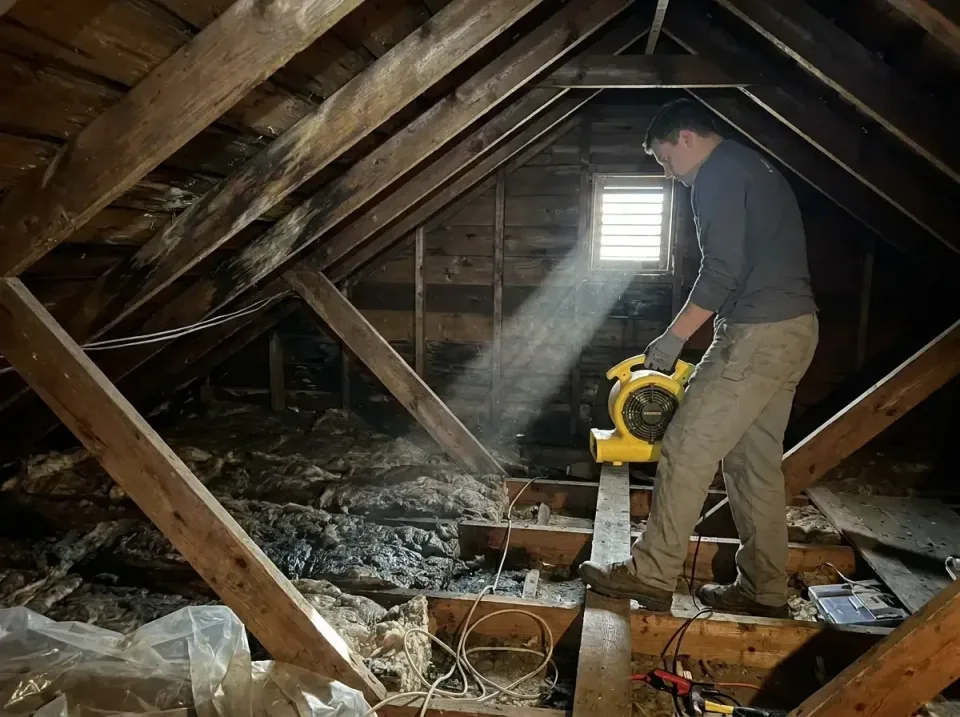
For difficult cavities, Water Damage Pros can pair moisture mapping with structural drying and dehumidification. Air-quality and drying service information can help property owners understand when controlled airflow is safer than open-room circulation.
Infrared cameras help locate temperature patterns associated with concealed water, but moisture mapping and infrared thermography need meter confirmation. That process can identify wet wall cavities before unnecessary demolition begins.
In Long Beach, brown ceiling stains, recurring mold spots, or a musty basement odor deserve more than surface cleaning. IICRC S500’s four water-damage classes help connect the findings with material depth and drying needs.
If odors continue, indoor air-quality testing may help determine whether hidden moisture remains. Flood-damage assessment guidance can also help explain the records commonly gathered for a claim.
Water Damage Pros can inspect the affected area, document moisture boundaries, and set a practical drying plan. Call (833) 710-2743 with the leak location, visible symptoms, and any electrical concerns ready.
Browse all nationwide service options and choose the right fit for your project.
Homeowners and property managers book Long Beach basement extraction and crawl space drying after leaks, flooding, or storm water intrusion.
Homeowners, contractors, and property managers book Long Beach structural drying for wet materials, humidity control, and dehumidification.
Homeowners and property managers book Long Beach mold remediation for contained spore removal, HEPA cleaning, and moisture control.
Homeowners and property managers book Long Beach sewage cleanup for contaminated water, debris, odors, and saturated materials.
Homeowners, property managers, and contractors book Long Beach carpet extraction for wet padding, water recovery, and controlled drying.
Homeowners and property managers book Long Beach gray water extraction for contaminated water, wet carpet, and moisture-damaged materials.
Homeowners and property managers book Long Beach ceiling drying for stains, leaks, and saturated gypsum board.
Homeowners and property managers book Long Beach air testing and HEPA scrubbing after flooding, odors, or suspected mold.
Homeowners, contractors, and property managers book Long Beach moisture mapping to locate hidden water and document drying needs.
Homeowners and property managers book Long Beach hardwood floor extraction and drying after leaks, floods, or saturated carpet.
Homeowners and property managers book Long Beach HEPA vacuuming and antimicrobial treatment after water damage or mold cleanup.
Homeowners and property managers book Long Beach odor removal, ozone treatment, and air cleaning after water damage.
Homeowners, contractors, and property managers book Long Beach wet vacuum extraction with air movers for saturated floors and contents.
Homeowners, contractors, and property managers book Long Beach contents drying and saturated material removal after water damage.
Storm damage water extraction for Long Beach homeowners, property managers, and contractors facing rain intrusion or floodwater.
Homeowners, property managers, and contractors receive organized claim records for water damage in Long Beach.
Homeowners, contractors, and property managers book Long Beach mold testing, air sampling, and controlled spore removal.
Homeowners, contractors, and property managers book Long Beach humidity monitoring and ventilation for damp, musty spaces.
Homeowners, contractors, and property managers book Long Beach drywall extraction to remove trapped moisture and dry wall cavities.
Homeowners and property managers book Long Beach crawl-space moisture control for damp ducts, odors, insulation, and hidden water damage.
Homeowners and property managers book Long Beach clean-water extraction for wet carpet, floors, drywall, and salvageable contents.
Commercial extraction and drying helps Long Beach property managers protect offices, retail spaces, and multifamily buildings after water damage.
Homeowners book Long Beach flood cleanup for water extraction, saturated material removal, and documented structural drying.
Homeowners, property managers, and contractors book Long Beach mold inspections and air testing after flooding or hidden moisture.
Select your region to see local emergency water extraction & 24/7 flood response providers and cities we cover.
We connect you with trusted local providers in your state or city. Call or email us today.