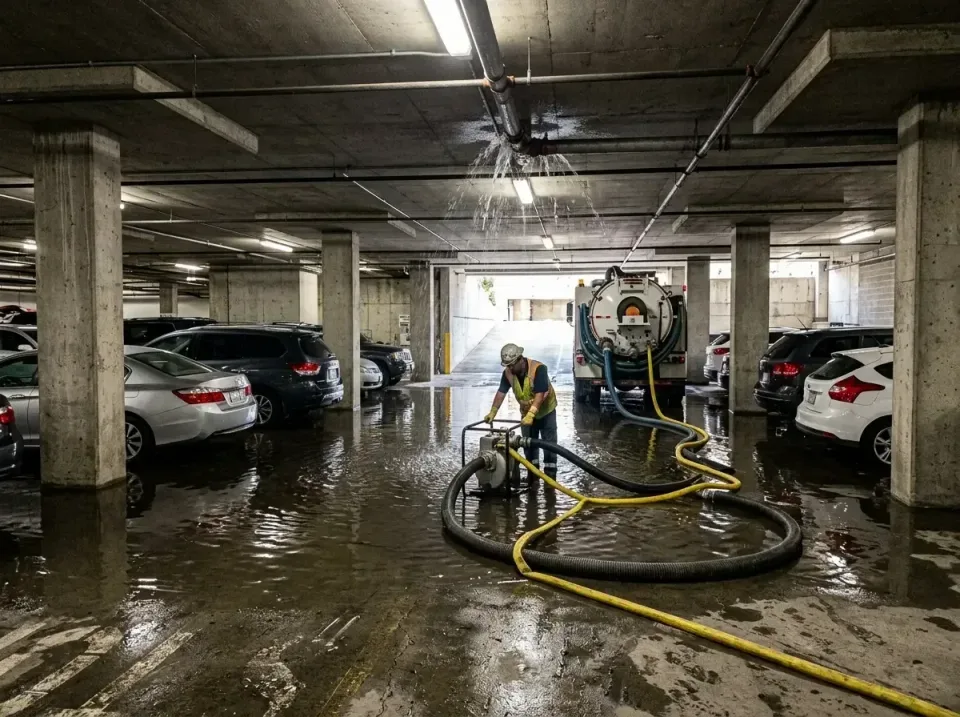
Basement Water Extraction & Crawl Space Drying
Homeowners and property managers book Long Beach basement extraction and crawl space drying after leaks, flooding, or storm water intrusion.
What should you do when standing water reaches an electrical outlet? Stop using the area, avoid switches, and leave until electrical safety is verified.
The first 24 hours are a priority extraction window because moisture can spread through walls, flooring, and contents.
In Long Beach, California, a slow leak can leave wet carpet padding beneath furniture while nearby outlets remain energized.
Do not step through water to unplug appliances. Move people and pets away, then arrange emergency water extraction and electrical evaluation.
Water Damage Pros can coordinate source removal, safe extraction, and structural drying after the area is cleared for work.
Electrical first: Standing water near an outlet requires electrical safety verification before equipment placement or cleanup.
Track the spread: Brown ceiling stains spreading outward can signal moisture migration beyond the visible room, so moisture mapping documents wet-area boundaries.
Protect flooring: Wet carpet padding beneath furniture may remain saturated after surface drying, requiring inspection before contents return.
Watch wood movement: Floorboards cupping after a pipe leak can indicate moisture below the finish, where a dry standard compares affected materials with unaffected areas.
Prevent recurrence: Mold spots returning after cleanup may require containment, antimicrobial treatment, and a documented drying plan rather than another surface wipe.
Do not touch outlets, power strips, appliances, or extension cords in standing water. NFPA 70, the National Electrical Code, requires evaluation of wet electrical systems before reuse, and electrical work belongs to a qualified electrician.
Verify electrical safety before equipment placement. Water Damage Pros can begin emergency water extraction after the area is cleared, using protected circuits and keeping hoses away from energized equipment. An axial air mover may move 1,000–3,000 CFM, but airflow never makes an unsafe circuit safe.
If water came from a clean supply line, the water category may be Category
A dry-looking wall can still hold moisture behind gypsum board, baseboards, or insulation. Moisture mapping records documented wet-area boundaries, while a pin meter measures material moisture and an infrared camera identifies surface temperature patterns.
Brown ceiling stains spreading outward, musty odor after basement flooding, and floorboards cupping after a pipe leak each suggest different moisture paths. A technician checks the affected drying class, which describes material and water volume, rather than relying on the outlet’s appearance.
Structural drying and dehumidification combine air circulation with moisture removal. An air mover pushes air across surfaces; an LGR dehumidifier removes water vapor. Psychrometrics, the measurement of air moisture, helps determine whether the room is actually drying.
Wet carpet padding beneath furniture often stays wet beneath the visible carpet. Remove movable contents only after photographing their positions, then stage salvageable items in a dry climate-controlled area.
Saturated gypsum board may require removal because its porous core can retain water. Oriented strand board behind flooring also needs careful drying because trapped moisture can affect structural components.
If demolition is needed, containment limits dust and spore spread. HEPA containment with negative-air control is more appropriate than opening walls throughout an occupied home. The ANSI/IICRC S520 mold-remediation standard and EPA Mold Remediation guidance help frame safe work practices.
A household fan may move air, but professional drying provides documented control instead of guesswork. Daily moisture readings, humidity readings, and equipment adjustments show whether materials are approaching a dry standard.
A commercial office building, multifamily property, or residence may need different access planning. Keep air movers clear of exits, protect walkways, and avoid placing equipment where it blocks an accessible route.
Call Water Damage Pros when water reaches outlets, sewage enters the room, moisture crosses multiple materials, or mold spots return. The team can coordinate emergency water extraction, moisture mapping, saturated material removal, and indoor air-quality testing after the electrical hazard is addressed.
Emergency water extraction removes bulk water first; structural drying and dehumidification then lower hidden moisture.
Air movers provide circulation, while dehumidifiers remove moisture. A truck-mounted extractor recovers high volumes, but portable equipment may suit stairs or tight access.
Clean water and black water require different handling because contamination changes protective measures and disposal. A regional restoration comparison can help explain why sewage cleanup requires stricter controls.
| Option | Best for | Key detail |
|---|---|---|
| Emergency water extraction | Standing water near outlets | Extraction hoses measure 1.5–2 inches |
| Structural drying and dehumidification | Walls, floors, and contents | LGR units remove 80–150 pints daily |
| HEPA air scrubbing | Dust or spore control | HEPA scrubbers move 500–2,000 CFM |
| Contaminated demolition | Black-water damage | Dump trailers hold 10–20 cubic yards |
Leave the hazard: Keep people and pets away until electrical safety is verified by a qualified professional.
Request dispatch: Water Damage Pros targets same-day emergency dispatch for active flooding and burst-pipe events.
Check power: Confirm dedicated circuits before deployment, then use GFCI protection around extraction equipment.
Secure access: Place equipment in low-traffic ventilated areas, route hoses across walkways securely, and keep exits clear.
Document contents: Create a photo-based contents inventory before moving or disposing of porous items; this supports insurance records and follows restoration process guidance.
Confirm clearance: Record daily moisture and humidity readings, then remove equipment only after materials reach the target dryness.
The IICRC S500 describes four water-damage classes, and the applicable class affects extraction effort, equipment days, and material removal.
Basement extraction: $1,000–$4,000, driven by volume, depth, and drying duration.
Crawl-space drying: $1,500–$5,000, influenced by access, insulation, and moisture levels.
Sewage cleanup: $2,000–$8,000, based on contamination, demolition, and disposal.
Whole-home water damage: $3,000–$10,000, reflecting affected materials and equipment days.
Light-commercial extraction: $5,000–$20,000, shaped by square footage and occupancy constraints.
A Category 1 loss may require less handling than Category 2 or Category 3 contamination. Regional labor, disposal rules, access, and drying conditions also affect the estimate. Final quotes vary by scope, materials, access, and drying conditions.
Expert insight:
Moisture does not stop moving when the floor feels dry. Vapor pressure drives moisture migration, so psychrometrics and air changes help confirm whether drying conditions are improving.
A drying class identifies affected material and volume, while a hygrometer tracks relative humidity. If humidity remains high, equipment may need repositioning before the job reaches its dry standard.
Air movers increase air changes, but they do not replace moisture extraction. For a practical overview of equipment placement and drying documentation, this restoration services guide provides a useful comparison.
Common mistake: Removing equipment because the outlet area looks dry, without checking wall cavities, padding, or flooring moisture.
Standing water near an electrical outlet is an electrical hazard first and a water-damage problem second. Keep the area clear, arrange electrical evaluation, and avoid testing appliances or switches yourself.
Black water backing into a bathroom requires separate sewage cleanup procedures. Condensation coating crawl-space ducts can also signal moisture that remains outside the visible room.
The first 24 hours are a priority extraction window, while indoor humidity should return toward the 30–50% range. HEPA filtration captures 99.97% of particles at 0.3 microns when air cleaning is needed.
Water Damage Pros serves Long Beach and all service areas with emergency extraction, moisture mapping, and structural drying.
Call (833) 710-2743 to describe the outlet location, water source, and current safety conditions so the next step can be planned.
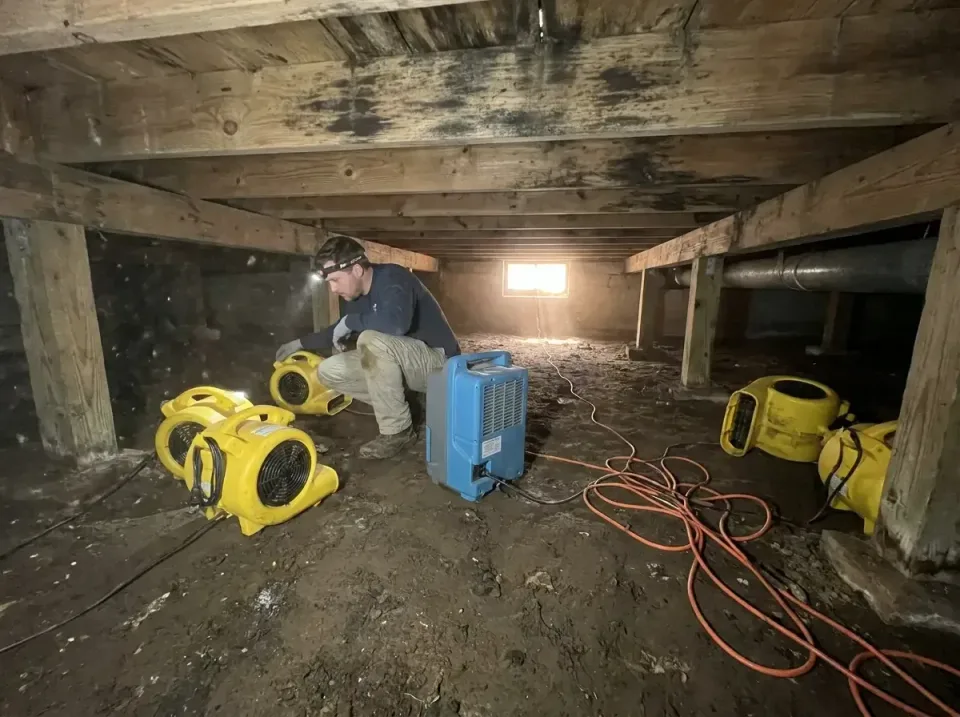
Browse all nationwide service options and choose the right fit for your project.
Homeowners and property managers book Long Beach basement extraction and crawl space drying after leaks, flooding, or storm water intrusion.
Homeowners, contractors, and property managers book Long Beach structural drying for wet materials, humidity control, and dehumidification.
Homeowners and property managers book Long Beach mold remediation for contained spore removal, HEPA cleaning, and moisture control.
Homeowners and property managers book Long Beach sewage cleanup for contaminated water, debris, odors, and saturated materials.
Homeowners, property managers, and contractors book Long Beach carpet extraction for wet padding, water recovery, and controlled drying.
Homeowners and property managers book Long Beach gray water extraction for contaminated water, wet carpet, and moisture-damaged materials.
Homeowners and property managers book Long Beach ceiling drying for stains, leaks, and saturated gypsum board.
Homeowners and property managers book Long Beach air testing and HEPA scrubbing after flooding, odors, or suspected mold.
Homeowners, contractors, and property managers book Long Beach moisture mapping to locate hidden water and document drying needs.
Homeowners and property managers book Long Beach hardwood floor extraction and drying after leaks, floods, or saturated carpet.
Homeowners and property managers book Long Beach HEPA vacuuming and antimicrobial treatment after water damage or mold cleanup.
Homeowners and property managers book Long Beach odor removal, ozone treatment, and air cleaning after water damage.
Homeowners, contractors, and property managers book Long Beach wet vacuum extraction with air movers for saturated floors and contents.
Homeowners, contractors, and property managers book Long Beach contents drying and saturated material removal after water damage.
Storm damage water extraction for Long Beach homeowners, property managers, and contractors facing rain intrusion or floodwater.
Homeowners, property managers, and contractors receive organized claim records for water damage in Long Beach.
Homeowners, contractors, and property managers book Long Beach mold testing, air sampling, and controlled spore removal.
Homeowners, contractors, and property managers book Long Beach humidity monitoring and ventilation for damp, musty spaces.
Homeowners, contractors, and property managers book Long Beach drywall extraction to remove trapped moisture and dry wall cavities.
Homeowners and property managers book Long Beach crawl-space moisture control for damp ducts, odors, insulation, and hidden water damage.
Homeowners and property managers book Long Beach clean-water extraction for wet carpet, floors, drywall, and salvageable contents.
Commercial extraction and drying helps Long Beach property managers protect offices, retail spaces, and multifamily buildings after water damage.
Homeowners book Long Beach flood cleanup for water extraction, saturated material removal, and documented structural drying.
Homeowners, property managers, and contractors book Long Beach mold inspections and air testing after flooding or hidden moisture.
Select your region to see local emergency water extraction & 24/7 flood response providers and cities we cover.
We connect you with trusted local providers in your state or city. Call or email us today.