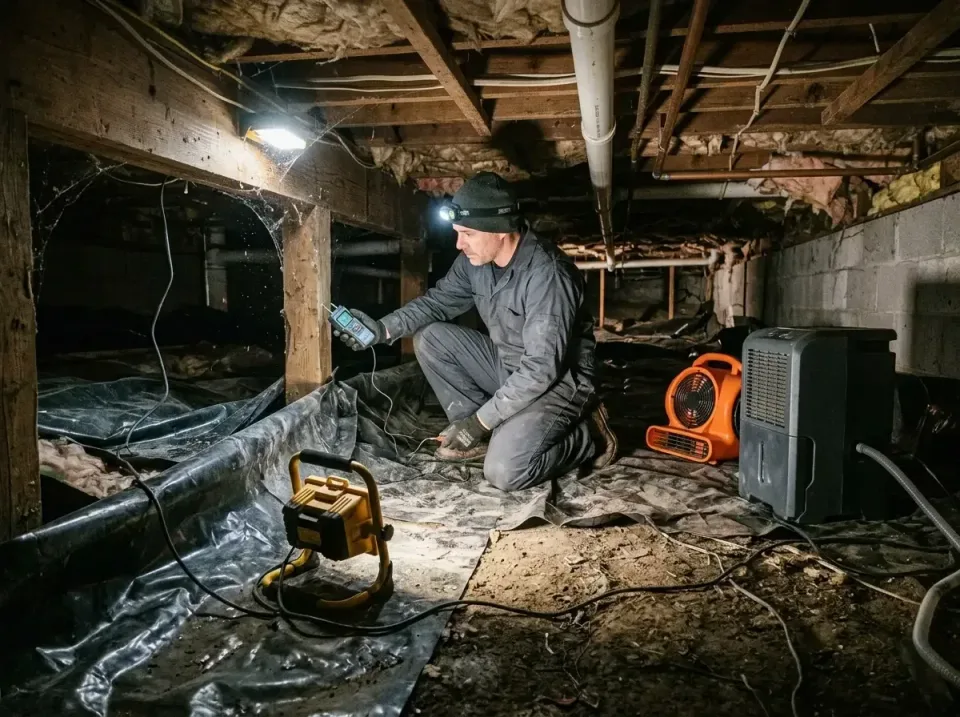
Basement Water Extraction & Crawl Space Drying
Homeowners and property managers book Long Beach basement extraction and crawl space drying after leaks, flooding, or storm water intrusion.
Can a flooded basement dry without removing its walls? Often, yes, when gypsum board is not saturated and moisture readings support in-place drying.
Musty odor after basement flooding usually means trapped moisture remains behind finishes, under flooring, or inside wall cavities. A technician checks GPP, or grains per pound, to understand how much moisture the air holds.
In Long Beach, California, coastal humidity can slow evaporation even after visible water disappears. Negative air creates controlled exhaust airflow, helping limit moisture and odors during targeted work.
Water Damage Pros can document conditions before cutting exploratory openings. Explore regional water damage response resources when comparing restoration methods across different climate zones.
The decision depends on water category, material saturation, contamination, and whether the wall cavity can dry safely.
Dry standard: Compare wet materials with unaffected materials before deciding to leave walls intact.
Class 4 saturation: Hardwood, plaster, or concrete may hold deep moisture that surface drying cannot resolve.
Moisture mapping: Documented wet-area boundaries reveal whether brown ceiling stains or damp carpet extend farther than expected.
Psychrometrics: Air-moisture measurement uses readings from a hygrometer and related equipment to guide drying conditions.
Humidity target: Indoor humidity of 30–50% supports safer drying, while an LGR dehumidifier removes moisture from enclosed spaces. A water restoration process overview can help homeowners understand why professional readings matter.
Leaving walls intact is reasonable only when moisture mapping, material readings, and contamination checks support that choice.
A basement can often dry without wall removal after a small clean-water leak, especially when drywall stayed above the waterline and its backside remains dry. The first 24 hours are the priority extraction window, because wet carpet padding, furnishings, and baseboards continue feeding moisture into nearby materials.
Technicians classify the water as Category 1, 2, or 3, then assess the drying class based on affected material and volume. Clean-water extraction differs sharply from black-water cleanup; sewage backing into a bathroom can make porous materials unsafe to preserve. A pin meter, thermal imaging camera, and cavity inspection help identify moisture migration without opening every wall.
Moisture mapping and infrared thermography show documented wet-area boundaries, but a thermal image is not proof of dryness. A pin meter provides material readings, while an infrared camera shows surface temperature patterns that may point to hidden dampness. Professionals compare those findings with an unaffected area and establish a dry standard before removing equipment. Basement water damage guidance can clarify why visual inspection alone misses concealed moisture.
Gypsum board is porous and often requires removal after prolonged saturation, especially where insulation, paper backing, or lower edges remain wet. Oriented strand board is a structural drying concern because trapped moisture can affect floors, rim areas, and wall assemblies even when paint looks normal.
Contents should move to a dry climate-controlled area before drying equipment blocks access. This protects salvageable belongings and gives technicians room to inspect the wall base, carpet pad, and flooring transitions. Basement and crawl-space drying may require separate equipment plans because duct condensation, insulation, and restricted access alter airflow.
If mold spots return after cleanup, the issue may be incomplete source removal rather than a need for stronger fragrance products. Mold remediation should follow ANSI/IICRC S520 practices, while structural drying follows ANSI/IICRC S500. HEPA filtration captures 99.97% of particles at 0.3 microns, but filtration does not replace removal of saturated materials.
An air mover circulates air across wet surfaces; a dehumidifier removes moisture from that air. Professional drying uses psychrometric monitoring, moisture readings, and equipment adjustments rather than relying on household fans that may spread damp air through the basement.
An LGR dehumidifier can support enclosed drying, while targeted wall-cavity systems may help when the board remains structurally sound. Equipment placement should leave exits clear, use appropriate circuits, and avoid electrical hazards near standing water. If outlets, wiring, or panels were wet, stop work and arrange an electrical evaluation before powering equipment.
Drying commonly takes 3–5 days, but that timeframe is conditions-dependent. Brown ceiling stains spreading outward, cupping floorboards, or a persistent musty odor indicate that technicians should keep checking adjacent assemblies instead of declaring the room dry after one reading.
Wall removal becomes more likely when gypsum board reaches saturation, contaminated water contacts porous materials, or moisture remains trapped after controlled drying. Class 4 conditions involve deep saturation in hardwood, plaster, or concrete and can require specialized extraction or longer monitoring.
A contained work area can limit dust and spore spread during selective demolition. Technicians may use HEPA containment and respiratory protection, then coordinate saturated material removal and antimicrobial treatment after extraction. Homeowners should photograph conditions, preserve damaged-material information, and request insurance documentation before disposal.
Water Damage Pros handles emergency water extraction, structural drying and dehumidification, and follow-up mold inspection when the evidence points beyond surface wetness. That measured approach helps avoid unnecessary wall openings while preventing concealed moisture from becoming a later repair.
The right option depends on contamination, access, and whether materials can reach a documented dry standard. Moisture mapping provides room-by-room drying documentation, while professional drying versus DIY fans means documented control rather than guesswork.
| Option | Best for | Key detail |
|---|---|---|
| Emergency water extraction | Fresh standing water | Truck-mounted recovery offers high volume; portable equipment suits stair access. |
| Structural drying and dehumidification | Walls and framing | LGR dehumidifiers remove moisture while air movers circulate air. |
| Basement and crawl-space drying | Restricted lower areas | Moisture mapping identifies boundaries before selective opening. |
| Hardwood floor drying | Cupped or damp boards | Pin readings guide drying; infrared patterns help locate migration. |
| Sewage and black-water cleanup | Contaminated flooding | HEPA containment supports negative-air control during demolition. |
For insurance files, drying logs and equipment records show why professional monitoring was selected; restoration documentation guidance explains that recordkeeping supports claim review.
Dispatch: Set a same-day emergency dispatch target, then photograph standing water, stains, and affected contents before moving items.
Safety check: Verify electrical safety, use GFCI protection, and keep people away from wet outlets or panels.
Assessment: Determine water category, inspect materials, and identify whether wall cavities need targeted testing.
Placement: Put equipment in low-traffic ventilated areas, keep air movers clear of exits, and route hoses securely across walkways.
Cavity drying: Consider Injectidry wall-cavity drying systems when sound wallboard conceals measurable moisture.
Monitoring: Record daily moisture and humidity documentation; equipment concepts associated with Phoenix Restoration Equipment can help technicians select suitable machines.
Clearance: Stage contents in a dry climate-controlled area and remove equipment only after readings meet the target dry condition. ASHRAE psychrometric principles build on humidity-control work that began with Carrier’s 1902 equipment.
Basement extraction commonly ranges from $1,000–$4,000, driven by water volume, depth, and drying duration. Air movers may deliver 800–2,400 CFM, depending on the model and room conditions.
Crawl-space drying is often $1,500–$5,000, with access, insulation, and moisture levels affecting labor and equipment days. Sewage cleanup may range from $2,000–$8,000 because contamination, demolition, and disposal add work.
Whole-home water damage commonly falls between $3,000–$10,000, based on affected materials and equipment days. Light-commercial extraction may reach $5,000–$20,000 when square footage and occupancy constraints increase coordination.
Drying often takes 3–5 days, conditions-dependent. HEPA filtration captures 99.97% at 0.3 microns when air cleaning is needed, but it does not eliminate demolition costs.
Regional labor, disposal rules, access, and equipment needs affect Long Beach projects. Final quotes vary by scope, materials, access, and drying conditions.
A wall should stay closed only when readings show controlled drying, not because its painted surface looks normal. Vapor pressure drives moisture movement, so an apparently dry room can still hold water inside a cavity.
Use an air mover as a high-velocity drying fan, but pair it with humidity control and measured air changes. A desiccant dehumidifier uses adsorption drying and can suit conditions where ordinary refrigeration equipment cannot reduce moisture effectively.
Containment limits dust and spore spread when selective demolition becomes necessary. Keep airflow directed toward the work area rather than exhausting contaminated air into occupied rooms.
A technician should compare readings over time, not rely on one low number near a doorway. Water Damage Pros can explain the documented path before equipment is removed; drying equipment guidance illustrates why airflow and moisture removal must work together.
Common mistake: Running fans continuously without measuring humidity can move moisture into colder walls, flooring, or crawl-space areas.
Walls do not always need removal after basement flooding. The safer decision follows water category, material readings, cavity conditions, and a dry standard rather than appearance alone.
For a Long Beach, CA home, moisture mapping and infrared thermography can locate migration behind finishes. Antimicrobial treatment and HEPA vacuuming may follow extraction, while saturated material removal is reserved for materials that cannot dry safely.
If floorboards are cupping after a pipe leak or odor returns, preserve photographs and request insurance claim documentation before discarding contents. A local restoration planning resource can help explain the difference between extraction and reconstruction.
Water Damage Pros can assess the basement, document readings, and outline whether targeted drying or selective removal fits the evidence. Prepare by shutting off the source if safe, avoiding wet electrical areas, and calling (833) 710-2743 for the next practical step.
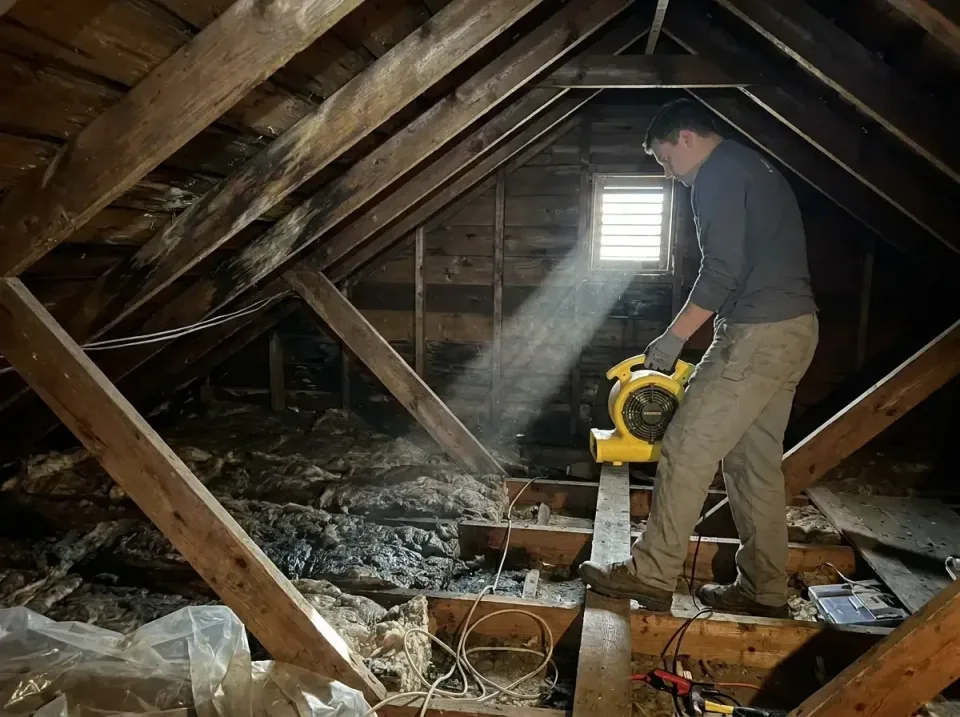
Browse all nationwide service options and choose the right fit for your project.
Homeowners and property managers book Long Beach basement extraction and crawl space drying after leaks, flooding, or storm water intrusion.
Homeowners, contractors, and property managers book Long Beach structural drying for wet materials, humidity control, and dehumidification.
Homeowners and property managers book Long Beach mold remediation for contained spore removal, HEPA cleaning, and moisture control.
Homeowners and property managers book Long Beach sewage cleanup for contaminated water, debris, odors, and saturated materials.
Homeowners, property managers, and contractors book Long Beach carpet extraction for wet padding, water recovery, and controlled drying.
Homeowners and property managers book Long Beach gray water extraction for contaminated water, wet carpet, and moisture-damaged materials.
Homeowners and property managers book Long Beach ceiling drying for stains, leaks, and saturated gypsum board.
Homeowners and property managers book Long Beach air testing and HEPA scrubbing after flooding, odors, or suspected mold.
Homeowners, contractors, and property managers book Long Beach moisture mapping to locate hidden water and document drying needs.
Homeowners and property managers book Long Beach hardwood floor extraction and drying after leaks, floods, or saturated carpet.
Homeowners and property managers book Long Beach HEPA vacuuming and antimicrobial treatment after water damage or mold cleanup.
Homeowners and property managers book Long Beach odor removal, ozone treatment, and air cleaning after water damage.
Homeowners, contractors, and property managers book Long Beach wet vacuum extraction with air movers for saturated floors and contents.
Homeowners, contractors, and property managers book Long Beach contents drying and saturated material removal after water damage.
Storm damage water extraction for Long Beach homeowners, property managers, and contractors facing rain intrusion or floodwater.
Homeowners, property managers, and contractors receive organized claim records for water damage in Long Beach.
Homeowners, contractors, and property managers book Long Beach mold testing, air sampling, and controlled spore removal.
Homeowners, contractors, and property managers book Long Beach humidity monitoring and ventilation for damp, musty spaces.
Homeowners, contractors, and property managers book Long Beach drywall extraction to remove trapped moisture and dry wall cavities.
Homeowners and property managers book Long Beach crawl-space moisture control for damp ducts, odors, insulation, and hidden water damage.
Homeowners and property managers book Long Beach clean-water extraction for wet carpet, floors, drywall, and salvageable contents.
Commercial extraction and drying helps Long Beach property managers protect offices, retail spaces, and multifamily buildings after water damage.
Homeowners book Long Beach flood cleanup for water extraction, saturated material removal, and documented structural drying.
Homeowners, property managers, and contractors book Long Beach mold inspections and air testing after flooding or hidden moisture.
Select your region to see local emergency water extraction & 24/7 flood response providers and cities we cover.
We connect you with trusted local providers in your state or city. Call or email us today.