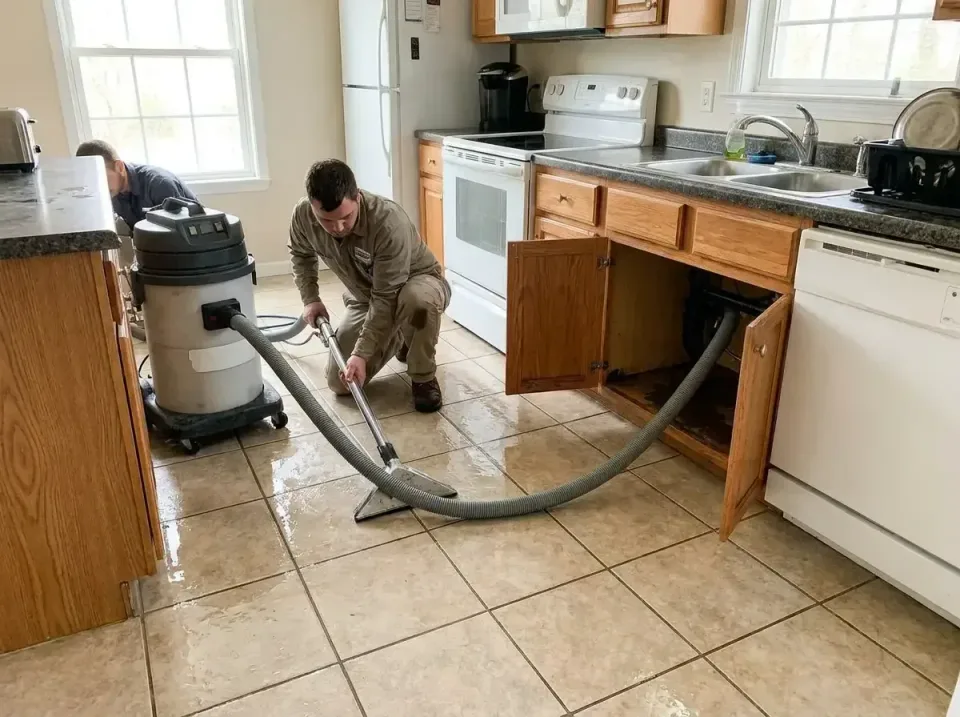
Basement Water Extraction & Crawl Space Drying
Homeowners and property managers book Long Beach basement extraction and crawl space drying after leaks, flooding, or storm water intrusion.
Musty odor after basement flooding does not automatically mean a demolition permit is required. In Long Beach, building permits usually govern demolition and reconstruction, while emergency extraction can begin safely first.
A permit question becomes more serious when crews remove gypsum board, alter framing, or expose electrical systems. Standing water near electrical outlets requires evaluation before anyone places powered equipment.
An air mover is a high-velocity drying fan, not a substitute for source removal or permit review. Water Damage Pros can document conditions before controlled removal and drying begins.
Keep photos of brown ceiling stains, wet padding, and damaged finishes before disposal. Our all service areas page lists broader coverage when property owners need help beyond Long Beach.
Ask the local building department about demolition and reconstruction separately. That distinction prevents a rushed cleanup from creating a later inspection problem.
Permit scope: Brown ceiling stains spreading outward may require approval when removal reaches framing or reconstruction.
Material evidence: Wet carpet padding beneath furniture should be photographed before saturated-material disposal.
Wood movement: Floorboards cupping after a pipe leak signals moisture migration, not automatic permit clearance.
Electrical safety: Standing water near outlets requires evaluation before extraction equipment is connected.
Drying records: Moisture mapping documents wet-area boundaries, while a hygrometer tracks relative humidity during work.
A drying class describes affected material and volume, helping separate surface cleanup from deeper demolition. Psychrometrics measures air moisture and supports defensible drying decisions.
ANSI/IICRC S500 recognizes four water-damage classes, so a small clean-water release differs from widespread structural saturation. The classification does not replace a local permit determination.
A desiccant dehumidifier uses adsorption drying when ordinary equipment cannot control moisture effectively. GPP, or grains per pound, helps technicians judge how much vapor the air carries.
Keep the permit file, photos, disposal receipts, and drying readings together. That packet gives Long Beach owners clearer records if reconstruction follows extraction.
The short answer is conditional: local jurisdictions regulate demolition and reconstruction, while emergency water removal may be treated differently from rebuilding. Removing loose carpet, pad, or damaged contents is not the same as taking out wall sections, structural sheathing, or ceiling assemblies.
In Long Beach, ask the building department whether the planned work is nonstructural removal, permitted demolition, or reconstruction. The International Residential Code has adopted provisions that vary by state, so a rule from another city may not apply here. A contractor should describe exactly which materials will be opened and whether framing, plumbing, or wiring changes are planned.
Brown ceiling stains spreading outward can indicate moisture migration above the visible damage. A pin and pinless moisture meter provides material readings, while infrared imaging shows temperature patterns that may reveal hidden wet areas.
Standing water near electrical outlets changes the job before demolition starts. NFPA 70, the National Electrical Code, requires evaluation of wet electrical systems, and equipment should not be connected until the area is considered safe.
The water category records contamination level: Category 1, 2, or
OSHA 29 CFR 1910.134 addresses respiratory protection, including respirator programs and fit testing. For chemical hazards, OSHA 29 CFR 1910.1200 covers hazard communication; crews should control dust and chemical exposure rather than treating demolition as ordinary cleanup.
HEPA containment uses negative-air control during demolition. HEPA filtration captures 99.97% of particles at 0.3 microns, but ozone is not a replacement for filtration or safe source removal. Before street or transfer-station disposal, owners should check regional flood cleanup practices alongside local disposal requirements.
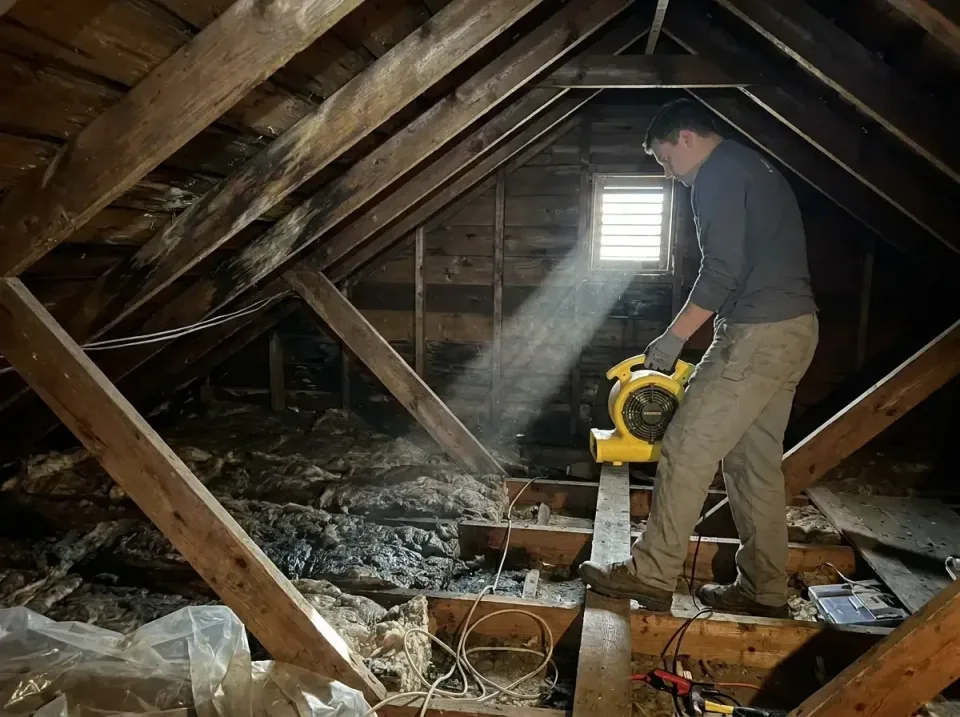
DIY fans may move air, but professional drying adds documented control. An air mover circulates air, while an LGR dehumidifier removes moisture; the two solve different parts of the drying problem.
ANSI/IICRC S500 identifies four water-damage classes, including Class 4 conditions involving deep saturation in hardwood, plaster, or concrete. Those materials can look dry at the surface while remaining wet below, which is why technicians compare readings with unaffected materials.
A drying period commonly takes 3–5 days, depending on material depth, water volume, temperature, and equipment performance. Daily moisture readings, equipment records, and psychrometric monitoring show whether the dry standard has been reached.
Call Water Damage Pros before removing wallboard when mold spots return, a musty odor persists, or floorboards continue cupping. The team can pair emergency water extraction with structural drying and dehumidification, moisture mapping, and saturated-material removal.
A contents inventory should be completed before porous materials are discarded. Salvageable contents can move to a dry climate-controlled area, while damaged gypsum board and other materials remain documented for insurance claim assistance.
Property owners should not wait for reconstruction plans before stopping active water entry. Water Damage Pros can help separate source removal, safe demolition, drying documentation, and the permit questions that belong to the local authority.
The table separates equipment choices from work scopes that may affect demolition review. A permit decision still depends on the local authority and planned reconstruction.
| Option | Best for | Key detail |
|---|---|---|
| Emergency water extraction | Burst pipes and storm entry | 24/7 dispatch supports the first response before reconstruction decisions. |
| Structural drying and dehumidification | Wet walls, floors, and framing | Psychrometric monitoring tracks humidity and temperature during drying. |
| Sewage and black-water cleanup | Category 3 contamination | Six-mil containment poly supports controlled work areas. |
| Contents and debris removal | Saturated furnishings and materials | Dump trailers commonly hold 10–20 cubic yards, subject to disposal rules. |
A HEPA scrubber filters particles, while ozone changes odor chemistry; filtration is safer for occupied areas. Before equipment staging, flood restoration planning guidance can help owners frame the scope for contractors.
Truck-mounted extraction recovers high water volume, while portable units may reach stairs and tight rooms. The right choice affects access and drying speed, not whether reconstruction requires a permit.
Dispatch: Arrange same-day emergency dispatch when active water remains, then photograph damage before materials move.
Safety: Verify electrical safety before equipment placement, especially near outlets, panels, and wet appliances.
Staging: Place equipment in low-traffic ventilated areas, keeping accessible parking and a 36-inch route clear.
Power: Check dedicated circuits and use GFCI protection before connecting extraction or drying equipment.
Routing: Secure hoses across walkways with low-profile protection, and keep air movers clear of exits.
Records: Use a thermal imaging camera for surface temperature mapping, then record moisture readings daily.
Clearance: Stage contents in a dry climate-controlled area and remove equipment after target dryness; transport safety information can clarify hauling responsibilities when debris enters public routes.
Permit fees and restoration charges are separate expenses. The first 24 hours remain the priority extraction window because faster water removal can reduce drying and material-loss exposure.
Basement extraction: $1,000–$4,000, driven by volume, depth, and drying duration.
Crawl-space drying: $1,500–$5,000, shaped by access, insulation, and moisture levels.
Sewage cleanup: $2,000–$8,000, influenced by contamination, demolition, and disposal.
Whole-home water damage: $3,000–$10,000, based on affected materials and equipment days.
Light-commercial extraction: $5,000–$20,000, depending on square footage and occupancy constraints.
HEPA filtration captures 99.97% of particles at 0.3 microns, which may add containment or air-scrubbing work. Regional labor, disposal rules, access, and permit requirements can change the final scope.
Final quotes vary by scope, materials, access, and drying conditions.
A surface can feel dry while the material remains above its saturation point. Check hidden edges, subfloors, and wall cavities before closing a permitted repair area.
A low-grain-refrigerant unit, or LGR dehumidifier, can pull moisture from air after extraction. Track air changes so containment does not simply move contaminated air into occupied rooms.
Antimicrobial treatment provides microbial-growth control after source removal and cleaning. It cannot replace removal of saturated materials or correction of the leak.
Containment creates an isolated work area, reducing dust and spore spread during demolition. Water Damage Pros uses the drying record to decide when equipment can leave, rather than relying on touch alone.
Common mistake: Painting over a musty area before moisture readings reach the dry standard can trap moisture and produce repeat damage.
For homeowners comparing cleanup methods, local water-damage service information can help distinguish drying work from reconstruction.
A flood demolition permit is usually a local scope question, not a blanket requirement for every extraction task. Removing contents differs from opening walls, altering framing, or rebuilding electrical and plumbing systems.
If mold spots return, request moisture mapping and infrared thermography before repairs close the area. Antimicrobial treatment and HEPA vacuuming may support cleanup, while insurance claim documentation preserves the work record.
Class 4 damage can involve deep saturation in hardwood, plaster, or concrete, so appearance alone cannot confirm readiness. Water Damage Pros can separate extraction, demolition, drying, and permit questions for Long Beach properties.
Review all service areas for broader coverage, then prepare photos and leak details. Call Water Damage Pros at (833) 710-2743 for a practical assessment and next-step quote.
Browse all nationwide service options and choose the right fit for your project.
Homeowners and property managers book Long Beach basement extraction and crawl space drying after leaks, flooding, or storm water intrusion.
Homeowners, contractors, and property managers book Long Beach structural drying for wet materials, humidity control, and dehumidification.
Homeowners and property managers book Long Beach mold remediation for contained spore removal, HEPA cleaning, and moisture control.
Homeowners and property managers book Long Beach sewage cleanup for contaminated water, debris, odors, and saturated materials.
Homeowners, property managers, and contractors book Long Beach carpet extraction for wet padding, water recovery, and controlled drying.
Homeowners and property managers book Long Beach gray water extraction for contaminated water, wet carpet, and moisture-damaged materials.
Homeowners and property managers book Long Beach ceiling drying for stains, leaks, and saturated gypsum board.
Homeowners and property managers book Long Beach air testing and HEPA scrubbing after flooding, odors, or suspected mold.
Homeowners, contractors, and property managers book Long Beach moisture mapping to locate hidden water and document drying needs.
Homeowners and property managers book Long Beach hardwood floor extraction and drying after leaks, floods, or saturated carpet.
Homeowners and property managers book Long Beach HEPA vacuuming and antimicrobial treatment after water damage or mold cleanup.
Homeowners and property managers book Long Beach odor removal, ozone treatment, and air cleaning after water damage.
Homeowners, contractors, and property managers book Long Beach wet vacuum extraction with air movers for saturated floors and contents.
Homeowners, contractors, and property managers book Long Beach contents drying and saturated material removal after water damage.
Storm damage water extraction for Long Beach homeowners, property managers, and contractors facing rain intrusion or floodwater.
Homeowners, property managers, and contractors receive organized claim records for water damage in Long Beach.
Homeowners, contractors, and property managers book Long Beach mold testing, air sampling, and controlled spore removal.
Homeowners, contractors, and property managers book Long Beach humidity monitoring and ventilation for damp, musty spaces.
Homeowners, contractors, and property managers book Long Beach drywall extraction to remove trapped moisture and dry wall cavities.
Homeowners and property managers book Long Beach crawl-space moisture control for damp ducts, odors, insulation, and hidden water damage.
Homeowners and property managers book Long Beach clean-water extraction for wet carpet, floors, drywall, and salvageable contents.
Commercial extraction and drying helps Long Beach property managers protect offices, retail spaces, and multifamily buildings after water damage.
Homeowners book Long Beach flood cleanup for water extraction, saturated material removal, and documented structural drying.
Homeowners, property managers, and contractors book Long Beach mold inspections and air testing after flooding or hidden moisture.
Select your region to see local emergency water extraction & 24/7 flood response providers and cities we cover.
We connect you with trusted local providers in your state or city. Call or email us today.