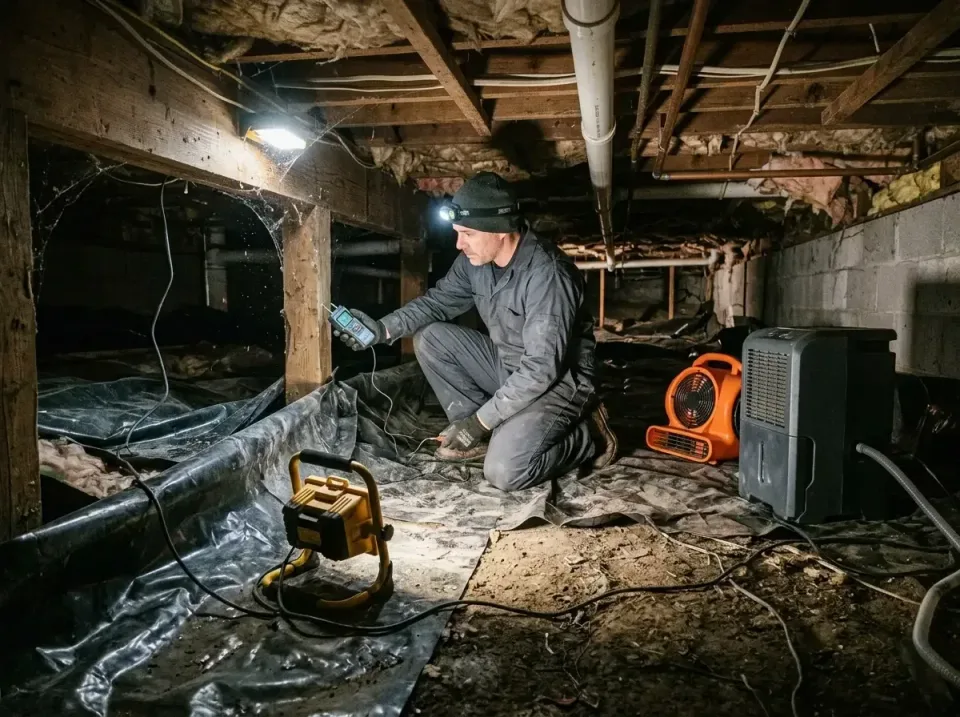
Basement Water Extraction & Crawl Space Drying
Homeowners and property managers book Long Beach basement extraction and crawl space drying after leaks, flooding, or storm water intrusion.
A musty odor after basement flooding usually means hidden moisture remains. Choose a provider that uses moisture mapping to document wet-area boundaries before drying begins.
In Long Beach, ask for a written scope covering extraction, drying, and damaged materials. A desiccant dehumidifier uses adsorption drying when ordinary air conditioning cannot control moisture.
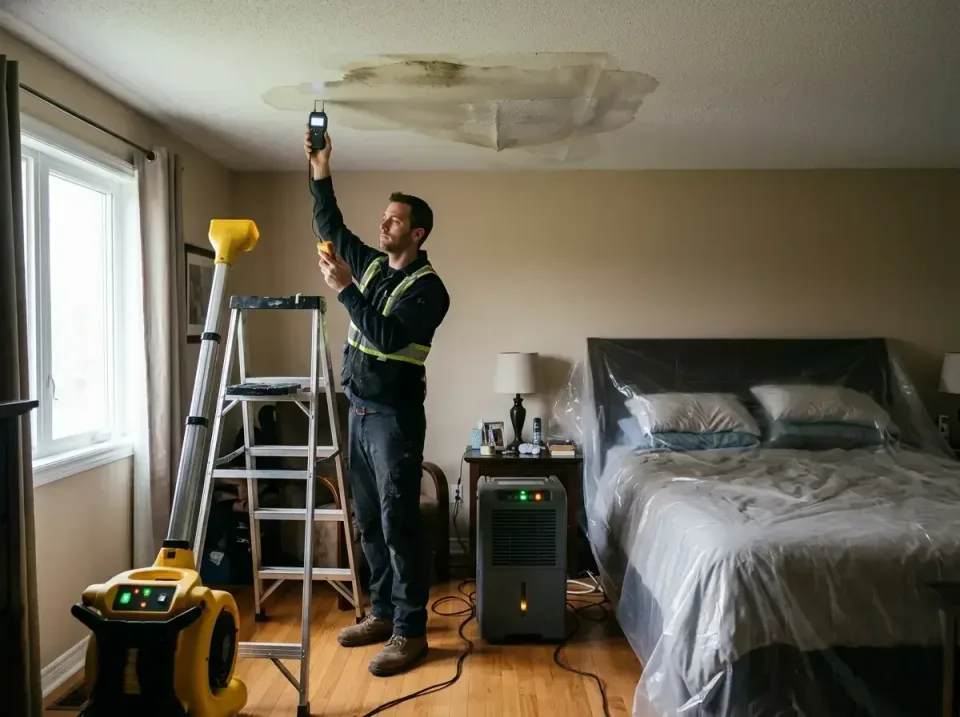
Brown ceiling stains spreading outward need source checks, not paint. Wet carpet padding beneath furniture also requires lifting, measuring, and deciding what can be dried.
Ask how readings will be recorded and compared with unaffected materials. Water Damage Pros can coordinate emergency extraction across all service areas when properties need a clear drying plan.
Odor control: Ask whether antimicrobial treatment will address microbial-growth control after extraction, rather than masking a basement odor.
Ceiling evidence: Require moisture mapping, because spreading brown stains can show moisture migration beyond the visible patch; restoration documentation guidance can help frame questions for contractors.
Carpet judgment: Confirm the drying class, which describes affected material and volume, before approving carpet or padding removal.
Wood protection: Ask how the team will measure floorboards before cupping worsens; a hygrometer records relative humidity around the work area.
Electrical safety: Standing water near outlets requires a power assessment before equipment arrives, with an LGR dehumidifier selected for moisture removal rather than air circulation alone.
Start with the water source, affected building, and required response. Emergency water extraction differs from sewage cleanup, while commercial water extraction may require work around occupants, schedules, and access controls.
A provider should explain whether the incident fits Category 1, 2, or 3 water and how that changes handling. Healthcare facilities and hotels may need quieter sequencing, protected corridors, and clear records for managers.
SERVPRO is a nationwide restoration provider, while BELFOR focuses on commercial disaster restoration. Those examples show why national reach alone does not prove that a crew understands your building, contents, or local access limits.
A professional scope should identify materials, readings, and the stopping point. Moisture mapping documents the affected rooms, while psychrometrics measures air moisture and helps technicians judge drying conditions.
Ask whether the company follows ANSI/IICRC S500 practices and provides daily readings. The Institute of Inspection Cleaning and Restoration Certification established restoration-cleaning certification standards in 1972, giving homeowners useful terminology for comparing scopes.
An air mover circulates air; it does not remove moisture by itself. A provider should explain the equipment choice, placement, and how readings will show progress instead of leaving fans running without a dry standard.
Floorboards cupping after a pipe leak can indicate moisture beneath the visible surface. A provider should inspect adjoining walls, cabinets, and subfloor areas rather than drying only the room where water first appeared.
Condensation coating crawl-space ducts also deserves attention because concealed areas can keep releasing moisture. Ask whether the provider offers structural drying and dehumidification, basement extraction, or follow-up mold inspection when symptoms remain.
The first visit should document source conditions, affected rooms, contents, and access concerns. Water Damage Pros can keep an insurance file organized with photographs, readings, and a written scope; commercial restoration planning resources can help property managers prepare comparable questions.
FEMA helps administer the National Flood Insurance Program, but coverage decisions still require accurate cause, dates, photographs, and drying records. Ask who supplies those records and who explains exclusions without promising claim approval.
Hotels and hospitality properties may need staged work that protects guest routes. A company familiar with occupied facilities should explain containment, contents handling, and work zones before demolition begins.
The same questions apply to a local home: Who arrives, what gets measured, what gets removed, and how is completion verified? Choose the provider that answers those questions plainly, documents changes, and separates extraction from reconstruction.
A 24/7 dispatch line matters when a burst pipe or storm starts overnight. Ask what the first crew can actually perform, not only whether someone answers the phone.
Equipment capacity should match the building. LGR dehumidifiers commonly provide 80–150 pints daily, while air movers may range from 1,000–3,000 CFM; water restoration equipment examples can help you compare terminology.
| Option | Best for | Key detail |
|---|---|---|
| Emergency water extraction | Burst pipes and standing water | 24/7 dispatch; extraction hoses are 1.5–2 inches |
| Structural drying | Walls, floors, and concealed moisture | LGR dehumidifiers: 80–150 pints daily |
| Storm damage extraction | Broad exterior or interior intrusion | Air movers: 1,000–3,000 CFM |
| Sewage cleanup | Contaminated water events | Ask about disposal scope and crew protection |
Confirm dispatch: Ask for a same-day emergency dispatch target and explain the source, rooms, and water depth.
Check safety: Require electrical safety verification before equipment placement, especially near outlets or panels.
Review access: Confirm hoses will be secured across walkways and exits will remain clear; this matters in multifamily apartment communities.
Verify power: Ask for a dedicated-circuit power check before machines start.
Protect contents: Require contents staging in a dry, climate-controlled area when furniture or documents are affected.
Request records: Ask for daily moisture and humidity documentation; FEMA National Flood Insurance Program claims often need organized evidence.
Confirm clearance: Choose a provider that removes equipment only after target dryness, not merely when surfaces feel dry; emergency restoration planning information can help managers prepare intake questions.
Basement extraction: $1,000–$4,000, driven by volume, depth, and drying duration.
Crawl-space drying: $1,500–$5,000, influenced by access, insulation, and moisture levels.
Sewage cleanup: $2,000–$8,000, based on contamination, demolition, and disposal.
Whole-home water damage: $3,000–$10,000, depending on affected materials and equipment days.
Light-commercial extraction: $5,000–$20,000, shaped by square footage and occupancy constraints.
ANSI/IICRC S500 identifies four water-damage classes, and a higher class can require more equipment and labor. HEPA filtration captures 99.97% of particles at 0.3 microns, while HEPA scrubbers may move 500–2,000 CFM during controlled work. Regional labor, disposal, and access conditions affect these ranges. Final quotes vary by scope, materials, access, and drying conditions.
A high-velocity air mover changes circulation, but psychrometrics determines whether the room can actually give up moisture. Track air changes and humidity readings before deciding that drying is complete.
Negative air provides controlled exhaust airflow when work creates dust or odors. It should support containment and protect adjoining occupied areas, rather than replace source removal.
A water category describes contamination level, so clean-water extraction cannot be treated like black-water cleanup. Ask the technician to explain the selected air mover, airflow direction, and recorded readings in plain language.
A common mistake is removing equipment because carpet feels dry while the subfloor remains wet. Water Damage Pros can review the affected materials, source, and measurements before recommending the next step; flood drying service information may help you prepare a comparison checklist.
Common mistake: Choosing the lowest initial quote without asking what measurements, demolition, and final clearance it includes.
The first 24 hours are the priority extraction window after a leak or flood. A musty odor after basement flooding, black water backing into a bathroom, or damp crawl-space ducts deserves measured follow-up.
Ask for source removal, moisture mapping, equipment records, and a clear finish standard. Keep indoor humidity near 30–50% during recovery when conditions allow.
Long Beach, CA homeowners can use all service areas to check broader coverage before arranging help. Water Damage Pros can review the water source, affected materials, access, and documentation needs.
The practical next step is to photograph the damage, avoid unsafe electrical areas, and call (833) 710-2743 for a scope-based discussion with Water Damage Pros.
Browse all nationwide service options and choose the right fit for your project.
Homeowners and property managers book Long Beach basement extraction and crawl space drying after leaks, flooding, or storm water intrusion.
Homeowners, contractors, and property managers book Long Beach structural drying for wet materials, humidity control, and dehumidification.
Homeowners and property managers book Long Beach mold remediation for contained spore removal, HEPA cleaning, and moisture control.
Homeowners and property managers book Long Beach sewage cleanup for contaminated water, debris, odors, and saturated materials.
Homeowners, property managers, and contractors book Long Beach carpet extraction for wet padding, water recovery, and controlled drying.
Homeowners and property managers book Long Beach gray water extraction for contaminated water, wet carpet, and moisture-damaged materials.
Homeowners and property managers book Long Beach ceiling drying for stains, leaks, and saturated gypsum board.
Homeowners and property managers book Long Beach air testing and HEPA scrubbing after flooding, odors, or suspected mold.
Homeowners, contractors, and property managers book Long Beach moisture mapping to locate hidden water and document drying needs.
Homeowners and property managers book Long Beach hardwood floor extraction and drying after leaks, floods, or saturated carpet.
Homeowners and property managers book Long Beach HEPA vacuuming and antimicrobial treatment after water damage or mold cleanup.
Homeowners and property managers book Long Beach odor removal, ozone treatment, and air cleaning after water damage.
Homeowners, contractors, and property managers book Long Beach wet vacuum extraction with air movers for saturated floors and contents.
Homeowners, contractors, and property managers book Long Beach contents drying and saturated material removal after water damage.
Storm damage water extraction for Long Beach homeowners, property managers, and contractors facing rain intrusion or floodwater.
Homeowners, property managers, and contractors receive organized claim records for water damage in Long Beach.
Homeowners, contractors, and property managers book Long Beach mold testing, air sampling, and controlled spore removal.
Homeowners, contractors, and property managers book Long Beach humidity monitoring and ventilation for damp, musty spaces.
Homeowners, contractors, and property managers book Long Beach drywall extraction to remove trapped moisture and dry wall cavities.
Homeowners and property managers book Long Beach crawl-space moisture control for damp ducts, odors, insulation, and hidden water damage.
Homeowners and property managers book Long Beach clean-water extraction for wet carpet, floors, drywall, and salvageable contents.
Commercial extraction and drying helps Long Beach property managers protect offices, retail spaces, and multifamily buildings after water damage.
Homeowners book Long Beach flood cleanup for water extraction, saturated material removal, and documented structural drying.
Homeowners, property managers, and contractors book Long Beach mold inspections and air testing after flooding or hidden moisture.
Select your region to see local emergency water extraction & 24/7 flood response providers and cities we cover.
We connect you with trusted local providers in your state or city. Call or email us today.